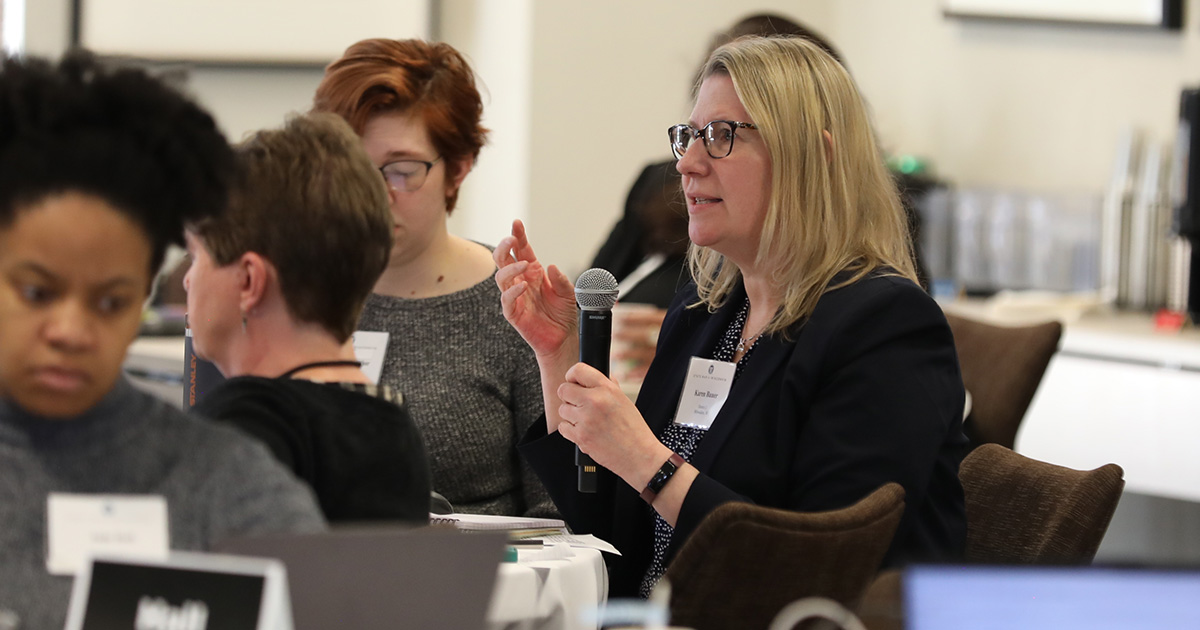
Dist. 2 Gov. Karen Bauer contributes to discussion at the April 10 Board of Governors meeting.
April 14, 2026 – The State Bar of Wisconsin’s 53-member Board of Governors (Board) meeting in Madison on April 10 worked to debug proposed bylaws requiring recusal or allowing removal of governors.
With significantly less discussion, the Board passed the Fiscal Year 2027 budget, which was unchanged from the Feb. 28 meeting.
The proposed amendments to the bylaws cover operations during a state or national emergency, which drew no concerns, and addressing the need to remove a governor, a lengthier discussion.
 Jay D. Jerde, Mitchell Hamline 2006, is a legal writer for the State Bar of Wisconsin, Madison. He can be reached by email or by phone at (608) 250-6126.
The proposed bylaw changes affect Supreme Court Rules (SCR) 10.04, about State Bar officers, and SCR 10.05, about the Board.
Because these proposed changes to the State Bar’s bylaws affect Supreme Court Rules, any changes the Board approves will require Supreme Court approval – which failed 15 years ago because the proposed language then did not clearly define cause.
An officer or governor has “to be an active member of the State Bar,” President-elect Stephen Sawyer explained, “and once they’re suspended or revoked, they would be ineligible to serve.”
The removal bylaws are intended “in situations that are fairly clear and obvious” early in the disciplinary process to address serious complaints that justify prompt removal, Sawyer explained.
“The [disciplinary] process is very lengthy, and it’s appropriate for the State Bar to remove that person before that process is completed.”
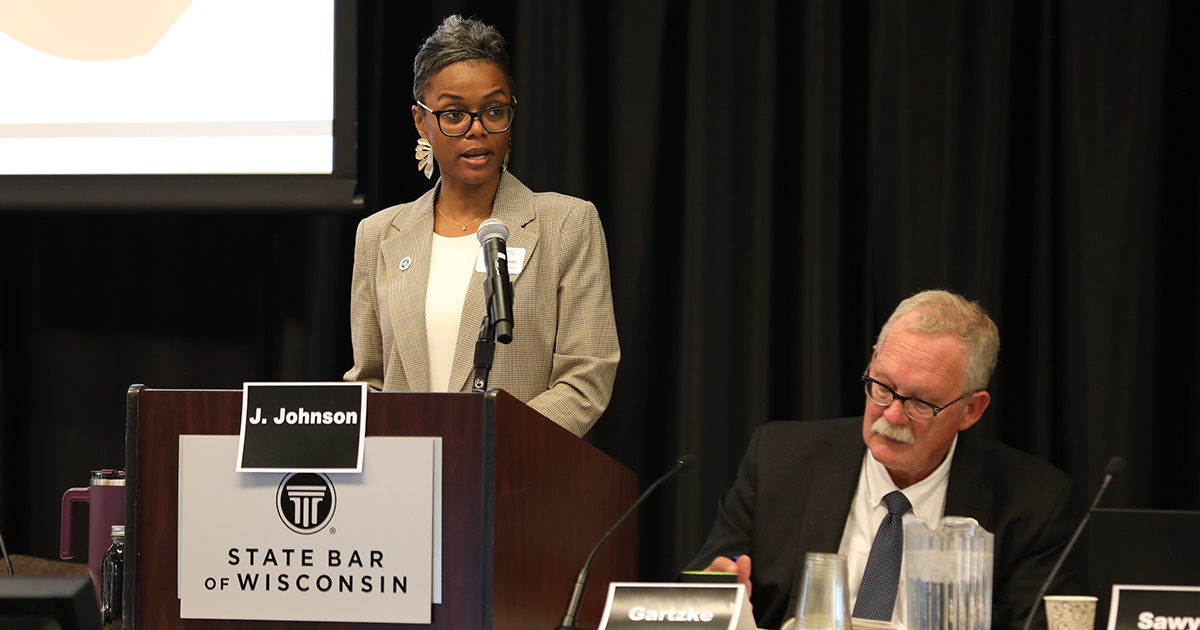
Board of Governors Chairperson Jennifer Johnson at the April 10 meeting with State Bar President Dan Gartzke to her left.
Proposed Bylaw
The proposed bylaw addresses removal or recusal in three situations.
If an officer’s or governor’s license to practice law is revoked or suspended in any jurisdiction where the lawyer practices law, or if the lawyer resigns the license, the proposed rule requires immediate removal from office.
If the suspension is shorter than the term of office, the position would remain vacant until reinstatement.
An officer or governor would be required to “recuse themselves from serving on the Board pending disposition of the matter” when subject to either:
- “[A] disciplinary complaint filed pursuant to SCR 22.11,” after the preliminary review hearing when the matter becomes public upon filing with the Supreme Court.
- “[A]ccused of the commission of an act involving misappropriation of [S]tate [B]ar funds, or conduct that may bring discredit to, or give rise to” State Bar liability.
Finally, a governor could be removed “for cause.” The bylaw states that removal is intended to be a last resort after a “good faith informal attempt to obtain consensual resolution.”
The request for removal would require a three-fourths approval of the full Executive Committee membership to reach a final decision by the Board, where a three-fourths vote of the full membership would be necessary for removal.
Removal for cause would include:
- “[A]ny conviction of a felony or misdemeanor involving conduct that reflects adversely on the lawyer’s honesty, trustworthiness or fitness as a lawyer in other respects.”
- “[V]iolation of any [S]tate [B]ar policies concerning harassment, discrimination, or intimidation.”
- “[I]ntentional breach of [S]tate [B]ar rules or bylaws” or “intentional disclosure of confidential or privileged [S]tate [B]ar information.”
- “[M]isappropriation of [S]tate [B]ar funds.”
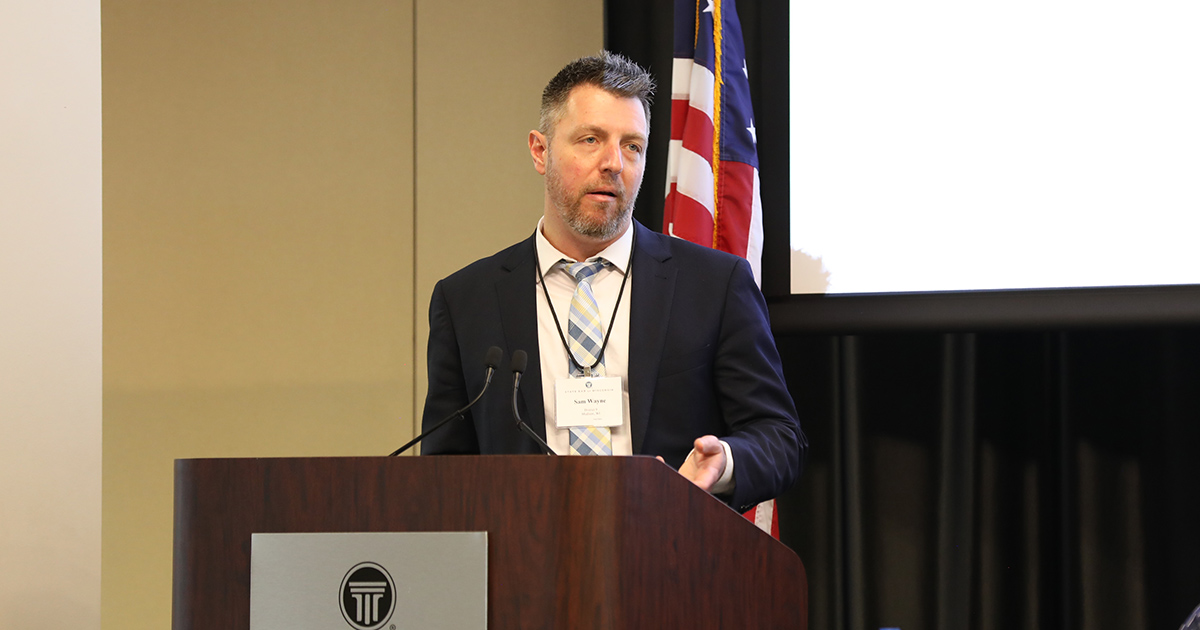
Dist. 9 Gov. Sam Wayne presents Policy Committee recommendations for revisions to the Board’s policy positions.
Cause
The definition of cause includes activities “that may or may not be something that rises to the level that would become a complaint to the Office of Lawyer Regulation [(OLR)] and affect their license to practice law,” Sawyer explained.
“And yet, it may be something that is determined by the Board to be a violation of the trust that a governor or an officer in the State Bar has committed.”
The high voting requirements demonstrate the need to focus on wrongful conduct, not mere disagreement or “personality conflict,” Sawyer said.
Others thought the voting requirements were too high.
“I think requiring a three-quarters vote of the Executive Committee because of the potential improper removals by the Executive Committee … underestimates our Executive Committee,” said Dist. 9 Gov. Sam Wayne.
“I cannot imagine any Executive Committee I have known … failing to abide by the letter of this removal clause for some kind of personal vendetta or political difference.”
Governors also asked for more specificity about due process. Dist. 2 Gov. Colleen A. Taylor summarized those concerns as: advance notice requirements, open or closed session, the ability of the accused to make a statement, and the right of counsel.
It may even be preferable to decide the issue in open session, Taylor said. “If this is an issue of public concern for our members, I think that they have a right to know what their governors are allegedly doing.”
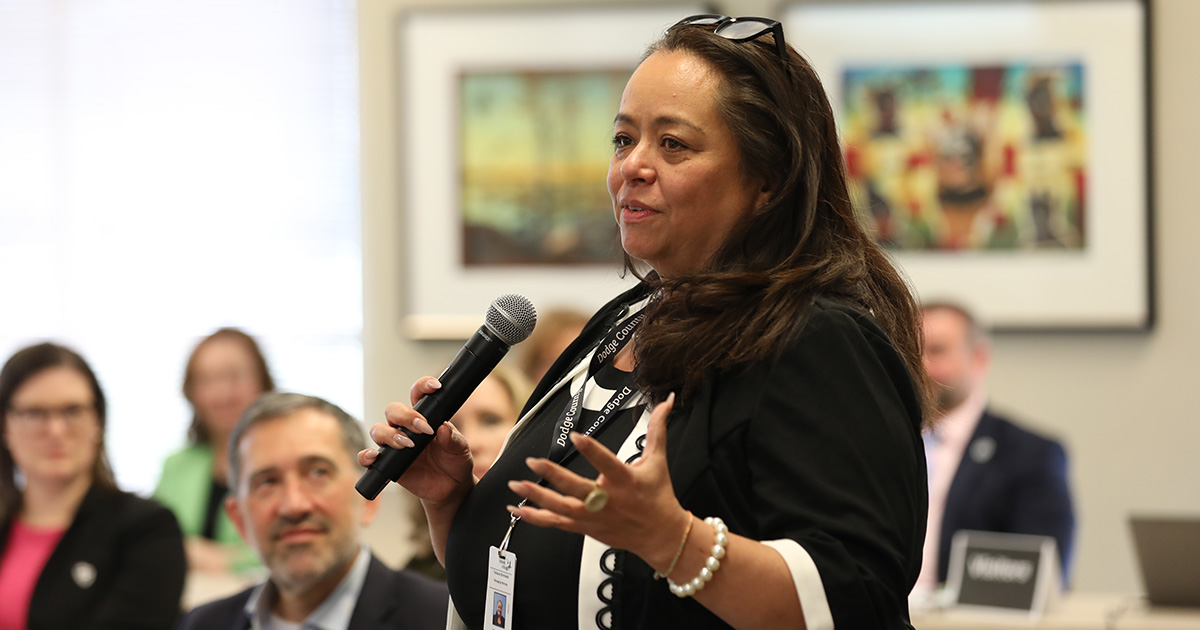
American Bar Association (ABA) Delegate Tatiana Shirasaki reports to the Board of Governors about ABA Days 2026, where she and other ABA members and State Bar lobbyists met with legislative representatives in Washington, D.C.
Confidential Information
Governors raised concerns about equating felonies and misappropriation with revealing State Bar privileged or confidential information.
Dist. 2 Gov. Lisa A. Lawless asked, “Is ‘confidential or privileged State Bar information’ defined elsewhere in the bylaws?”
“Because my concern is that two different lawyers may have a different view on what’s privileged or not, or there could be a difference of opinion as to when the privilege applies, [and] who can invoke it.”
That’s a good point, Sawyer said, but the typical confidential information comes in closed session involving attorney-client privilege – and the potential removal has the added protection of Executive Committee review followed by Board review.
Dist. 9 Gov. Richard G. Niess said he cannot see himself supporting a rule that would permit removal for cause for mere disclosure.
“This is a representative body and democratic outfit, and I need to be able to tell people what’s going on,” Niess said.
“I am concerned that we are in a danger zone of potentially [overusing] closed sessions.”
The Board will discuss revised draft language at a future meeting.
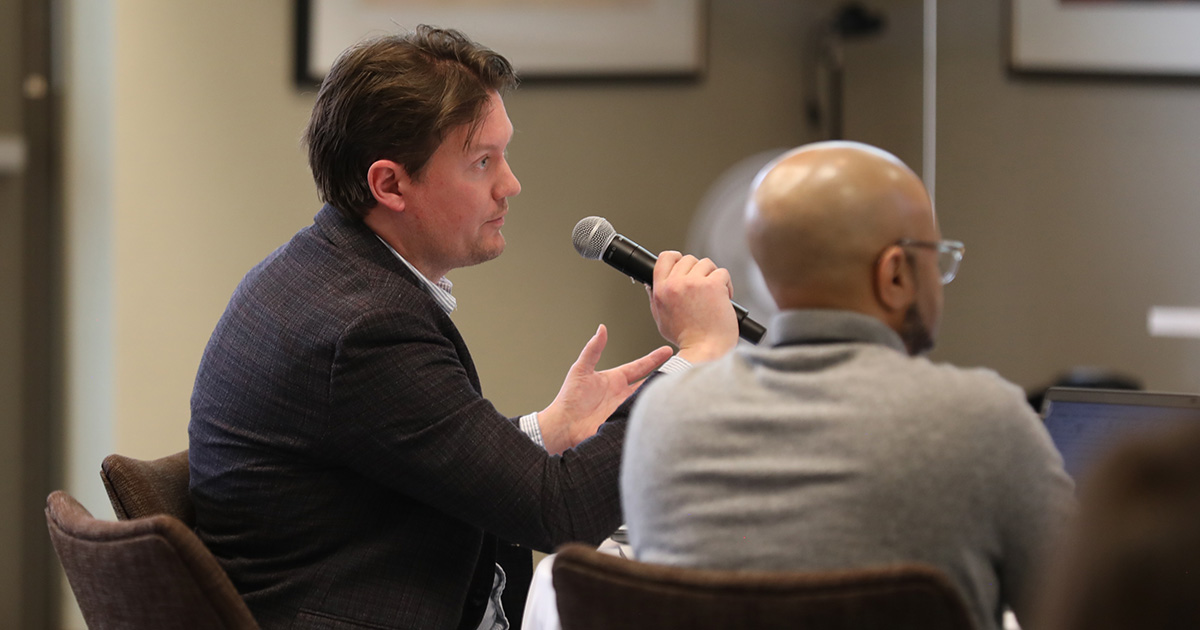
Dist. 2 Gov. Christopher August asks a question during discussion at the April 10 Board of Governors meeting.
Budget Approval
The Board approved the Fiscal Year 2027 (July 1, 2026 to June 30, 2027) budget. The budget provides a fiscally conservative bottom-line surplus of $29,193. Adding back in the less predictable budgeted unrealized gains and losses on State Bar investments brings the final surplus to $83,530.
The budget also calls for a $6 member dues increase – a 2% hike that was below the current rate of inflation in December and January.
Both the Executive Committee and the Finance Committee previously reviewed, approved, and recommended this budget, said Finance Director Jackie Jacobson, who presented the budget to the Board.
Sawyer raised a concern that, based on an article he read that morning, “the rate of inflation last month may have increased dramatically because of the war in the Middle East.”
Jacobson confirmed, “There is no concern that we can’t manage to the budget that’s in front of you.”
Other Items
Policy Updates. The Board approved revisions to policy positions in the “white book,” based on recommendations from the Board’s Policy Committee. The changes modernized language and removed positions that are no longer relevant.
Consent Agenda. The Board approved amendments to the Public Interest Law Section’s bylaws.
Members may obtain a copy of the minutes of each meeting of the Board of Governors by contacting State Bar Executive Coordinator Kim Jansen by email or phone at 608-250-6106.
