
When evaluating a case, the initial focus is often on who is at fault and what liability insurance may be available. But in today’s world, such evaluations are rarely so simple. Instead, with multiple layers of insurance frequently operating in the background, a proper evaluation requires identifying which insurers paid for the incident, what right each payor claims, and who has priority when settlement funds finally come in.
For example, a routine accident may involve a health plan, an auto carrier, and a worker’s compensation insurer all paying benefits for the same injury and then competing for the same limited pool of recovery. Each may seek repayment, but the nature of the lien, and the defenses available against it, can change substantially depending on the source of the asserted right.
The point is that, before money moves, identifying such insurers and the claims asserted will help get ahead of a wide range of potential issues, including whether common-law doctrines such as made whole and common fund apply, whether a statute dictates distribution, or even whether a payor is asserting subrogation at all.
Start by Identifying the Source of the Recovery Right
Subrogation comes into play when an insurer is permitted to step into the shoes of its insured and pursue recovery from the party responsible for the loss. The purpose of subrogation is to prevent double recovery and place the loss on the party that caused it. But not every reimbursement claim labeled “subrogation” is governed by the same rules.
 Stephen Smith, Oklahoma City Univ. 2012, is a partner in AxePoint Law, Milwaukee. His practice focuses on nationwide insurance subrogation, commercial litigation, injury and product liability litigation, and ERISA and employee benefits litigation. He is licensed to practice law in Wisconsin, Illinois, and Minnesota and regularly writes and speaks on subrogation issues.
There are generally three categories of subrogation: equitable, contractual, and statutory. Equitable subrogation arises by operation of law. Contractual, or conventional, subrogation arises from policy or plan language. Statutory subrogation arises because a statute creates the right.[1] That distinction matters because the source of the payor’s right of recovery determines the rules, defenses, and priorities that apply.
For example, an auto carrier and a worker’s compensation carrier may both seek reimbursement after paying benefits, but they are not necessarily asserting the same kind of right. An auto carrier may be relying on equitable or contractual subrogation. A worker’s compensation carrier, by contrast, proceeds under Wis. Stat. section 102.29, which supplies its own procedures and allocation rules; indeed, Wisconsin courts have treated section 102.29 as creating an independent statutory cause of action rather than ordinary subrogation.[2]
Ask Whether Made Whole Applies
Once the nature of the claims has been ascertained, the typical next question is whether the made-whole doctrine applies.
Wisconsin, like many jurisdictions, adheres to the public policy that an insured must be fully compensated before the insurer can recover against its insured. The goal is to avoid a situation in which the insurer is seeking a share of an inadequate source of funds. In Rimes v. State Farm Mutual Automobile Insurance Co., the Wisconsin Supreme Court explained that the test of wholeness turns on whether the insured has been “completely compensated for all the elements of damages,” not merely those damages for which the insurer has indemnified the insured.[3]
In Ruckel v. Gassner, the Wisconsin Supreme Court bolstered the doctrine and rejected an attempt to contract around the made-whole rule through a reimbursement and subrogation provision that purported to give the insurer first priority to be repaid from the insured’s recovery. The court held that an insurer is not entitled to subrogation against its insured unless and until the insured is made whole, regardless of contractual language to the contrary.[4]
When a dispute exists, Rimes also sets in place an evidentiary hearing (commonly referred to as a “Rimes hearing”) at which the court determines whether the plaintiff’s total damages exceed what the plaintiff recovered from all sources. If so, the plaintiff has not been made whole and ordinarily does not have to turn over recovery to a subrogated insurer. “[O]nly where an injured party has received an award by judgment or otherwise which pays all of his elements of damages, including those for which he has already been indemnified by an insurer, is there any occasion for subrogation.”[5]
Bring the Lienholder into the Case Early
Pursuant to Wis. Stat. section 803.03(2), the party asserting the principal claim is supposed to join others with a subrogation right, derivative claim, or assignment from the principal. The court of appeals explained that subrogated insurers should be brought in as party plaintiffs or involuntary plaintiffs rather than as party defendants in the underlying action.[6]
What comes next is a choice by the joined insurer. It can participate, agree to have its interest represented by the principal plaintiff, or seek dismissal. In turn, a carrier that participates has an equal voice in the prosecution of the claim under the statute, whereas a carrier that elects representation by the plaintiff does not and may be bound by the judgment.[7]
Keep Damages Separate from Reimbursement
Typically, the amount of damages a plaintiff may recover is distinct from the amounts paid when an insurer has paid benefits as a result of the underlying loss.
For example, in Leitinger v. DBart Inc., the Wisconsin Supreme Court held that the proper measure of damages is the reasonable value of the medical treatment reasonably required by the injury, and that this value is not necessarily the amount actually paid or the amount billed. This is because the collateral source rule prohibits introducing evidence of the amount paid by alternative sources to prove the reasonable value of medical treatment.[8]
Put differently, the damages issue against the tortfeasor asks what treatment was necessary, whether it was related to the accident, and the reasonable worth. The reimbursement issue is different. As Leitinger explained, the plaintiff may still pursue the reasonable value of the medical services, while the insurer may seek recoupment of the amounts it paid.
So, the payor’s reimbursement rights may define what the payor can recover, but they do not cap the tortfeasor’s liability for the reasonable value of the medical services.
Draft Settlement Language with Subrogation in Mind
The pertinent question on this issue is whether the settlement terms create a limitation on the settlement funds that otherwise would not exist. The terms used in an agreement can reshape the subrogation dispute by expanding or shrinking the practical pool of funds that remains available after the release is signed.
The case of Schulte v. Frazin is illustrative. In Schulte, the plaintiff agreed in a settlement with the tortfeasor to indemnify against an insurer’s subrogation claim. Practically speaking, this created a limited pot of funds over which the insured and the insurer competed, thereby invoking the made-whole doctrine. In that setting, the indemnity language mattered because the insurer’s recovery from the tortfeasor would effectively come back out of the plaintiff’s settlement proceeds.[9]
Muller v. Society Insurance shows the other side of the same issue. In Muller, there was no indemnification agreement, the insured had the first chance to settle with the tortfeasor, and the insurer later pursued its own separate subrogation recovery. Because the insurer was not competing with its insured for the same limited pool, the made-whole doctrine was not implicated in the same way.[10]
Worker’s Compensation Follows Its Own Statutory Rules
When benefits are paid by a worker’s compensation carrier or employer, Wisconsin’s third-party liability statute, Wis. Stat. section 102.29, creates a shared claim between the injured employee and the employer or compensation carrier. The statute gives each party the same right to make a claim and an equal voice in the prosecution of the claim.[11]
As to the latter, the statute dictates that there is first a deduction for the reasonable cost of collection, followed by one-third of the remaining amount to the employee, after which the employer or carrier is reimbursed, with any remainder going to the employee and operating as a future credit.[12]
The statute also matters because Wisconsin cases explain that rights under section 102.29 are statutory and in fact have been described as “not subrogation in the common-law sense” and therefore the made-whole doctrine does not apply.[13]
ERISA also Follows Its Own Statutory Rules
The Employee Retirement Income Security Act of 1974 (ERISA) is the federal statute that governs many private employer-sponsored benefit plans, including many health plans. A self-funded plan pays benefits directly rather than through purchased insurance. ERISA broadly preempts state laws that relate to covered plans, its civil-enforcement provision lets a fiduciary seek equitable relief to enforce plan terms, and its deemer clause prevents a self-funded plan from being treated as an insurer for purposes of state insurance regulation.
This is important to recognize because self-funded ERISA plans with sufficient plan terms can preempt and negate common-law doctrines such as made whole.[14]
Do Not Let Distribution Become a Second Lawsuit
By the time the settlement check arrives, most lawyers think the case is over. In lien practice, that is often the point where a new dispute begins.
That is the real takeaway. Before money moves, identify who paid, what right each payor is asserting, and what body of law controls that right.
The point of doing that work early is to determine who gets paid, when, and why, before settlement proceeds turn into a second round of litigation. In lien practice, that may be the difference between closing a file cleanly and starting a new fight after the case was supposed to be over.
Also of Interest
Learn More about Subrogation and Other Insurance Law Issues
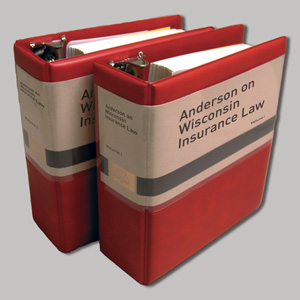
Anderson on Wisconsin Insurance Law, from State Bar of Wisconsin PINNACLE, delivers concise explanations of cases and court decisions that affect how insurance policies are written, interpreted, and applied in Wisconsin. The book’s primary purpose has remained the same over the years: to provide a tool to help foster understanding of insurance coverage issues for the insurance industry, insurance lawyers, and the courts.
This two-volume set contains definitions and explanations of the responsibilities of insurers, insureds, and insurance agents. You’ll learn the rationale behind a comprehensive array of topics, including interpretation of insurance contracts, automobile liability insurance, uninsured and underinsured motorist insurance, general liability policies, fire and property insurance, insurers’ duty to defend, insurers’ investigation and handling of third-party claims, and first-party claims against insurers.
There is an entire chapter devoted to subrogation, including the following detailed sections: What Is Subrogation?; Forms of Subrogation; Limits on Subrogation; Subrogation Priorities and Made-Whole Doctrine; Subrogation Not Allowed; Statute of Limitation; Settlement and Separate Releases; Obligations of Parties Asserting Subrogation; Insured’s Obligations; Governmental Payments; Subrogation and UM and UIM Insurers; and Motor Vehicle Medical Payments Coverage.
Experienced attorneys will appreciate Anderson on Wisconsin Insurance Law for keeping them up to date; novices will benefit from the book’s accessible, simple explanations of complicated insurance laws.
Most lawyers encounter insurance issues in their practices – don’t be unprepared. Have the answers nearby with the latest edition of Anderson on Wisconsin Insurance Law.
wisbar.org/AK0207
Endnotes
[1] Steadfast Ins. Co. v. Greenwich Ins. Co., 2019 WI 6, 385 Wis. 2d 213, 922 N.W.2d 71. ^
[2] Campion v. Montgomery Elevator Co., 172 Wis. 2d 405, 493 N.W.2d 244 (Ct. App. 1992). ^
[3] Rimes v. State Farm Mut. Auto. Ins. Co., 106 Wis. 2d 263, 275, 316 N.W.2d 348 (1982). ^
[4] Ruckel v. Gassner, 2002 WI 67, 253 Wis. 2d 280, 646 N.W.2d 11. ^
[5] Rimes, 106 Wis. 2d at 275. ^
[6] Anderson v. Garber, 160 Wis. 2d 389, 466 N.W.2d 221 (Ct. App. 1991). ^
[7] Wis. Stat. § 803.03(2)(b). ^
[8] Leitinger v. DBart Inc., 2007 WI 84, 302 Wis. 2d 110, 736 N.W.2d 1. ^
[9] Schulte v. Frazin, 176 Wis. 2d 622, 500 N.W.2d 305 (1993). ^
[10] Muller v. Soc’y Ins., 2008 WI 50, 309 Wis. 2d 410, 750 N.W.2d 1. ^
[11] Wis. Stat. § 102.29(1)(b). ^
[12] Id. ^
[13] Threshermens Mut. Ins. Co. v. Page, 217 Wis. 2d 451, 465, 577 N.W.2d 335 (1998). ^
[14] US Airways Inc. v. McCutchen, 569 U.S. 88 (2013). ^
» Cite this article: 99 Wis. Law. 28-31 (May 2026).
