Spotlight
Don’t Forget to Vote in State Bar Elections this Month
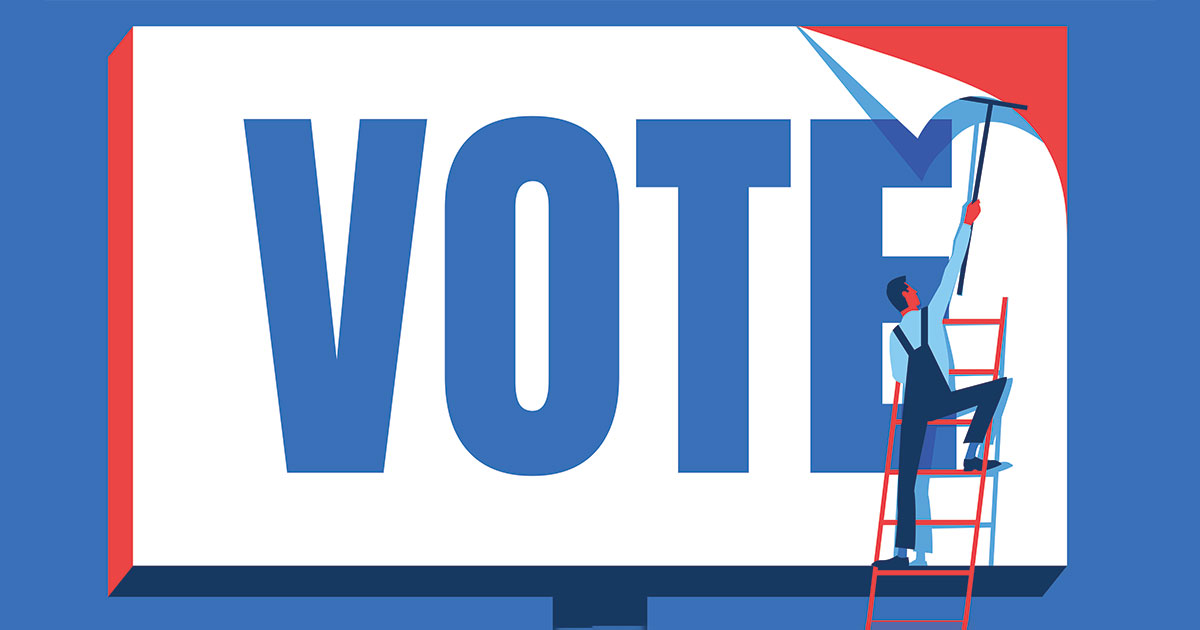
All State Bar of Wisconsin elections (including for State Bar divisions and sections) will be held via an electronic ballot, starting April 9, 2026.
The election closes at 12 p.m. Central Time, April 24, 2026.
Please note: If you have placed any holds on emails from the State Bar, you may not receive an electronic ballot.
Contact Customer Service at (800) 444-9404 to verify that your account is set up to receive your email ballot.
State Bar members with no email address on file will receive paper ballots. Paper ballots will be mailed April 8, 2026.
On the Radar
Ski Resort Litigation Watch

Are you hitting the slopes for spring break? Before you go, you should know that Colorado snow levels are well below average for this time of year, but litigation drifts are forming.
A snowboarder lost an eye while shredding the gnar at Keystone Resort in Colorado in 2024.
Now, he’s suing Vail Resorts, which owns Keystone, as well as apparel makers Oakley and Salomon, which manufactured the sunglasses and helmet he was wearing.
The plaintiff, Duncan McDonald, alleges that he caught an edge and fell face-first into the snow, which caused the injuries, including permanent vision loss. Claims relate to product liability, negligence, breach of warranty, and failure to warn or recall.
In Telluride, Colo., the Telluride Ski Resort filed a lawsuit in February, alleging that current and former elected officials conspired to pressure the owner, Chuck Horning, to sell the resort and leveraged a ski patrol strike that shut down the resort for 13 days.
Source: New York Times; Denver Post; OpenSnow
Got a Nugget to Share?
Send your ideas for interesting facts, trends, tips, or other bits and bytes to wislawmag@wisbar.org, or comment below.
Good Idea?
LegalZoom Launches App Inside ChatGPT for Business Formation
Those looking to form a business can now use LegalZoom inside the ChatGPT app to explain their business formation plans, “allowing users to access attorney-backed expertise,” according to a press release from LegalZoom.
The press release says the LegalZoom app, powered by ChatGPT, will provide education and guidance on business formation, help users understand business formation options, and connect them to Legal Zoom services and independent attorneys.
Meanwhile, OpenAI, which developed ChatGPT, is accused of practicing law without a license in a lawsuit filed by an insurance company.
“As Dela Torre’s legal assistant and advisor, OPENAI intentionally induced and facilitated Dela Torre’s breach of a valid and enforceable settlement agreement with NIPPON by encouraging and assisting her in filing a motion to reopen a lawsuit that had been dismissed with prejudice,” the complaint states.
“It also aided and abetted her abuse of the judicial process.”
Source: Business Wire; Reuters
From the Archives
Treat Clients Respectfully
Twenty years ago, in 2006, the late Mike Guerin wrote a President’s Message titled, “Treat Clients Respectfully.”
He noted a study of medical malpractice cases, which concluded that highly skilled and specialized physicians are sued much more often than their lesser-skilled and specialized colleagues because people “tend not to sue doctors they like.”
Applying the concept to lawyers, Guerin said, “Give your clients an extra minute on the phone. Reply to voicemail and email messages as soon as possible. Be on time for court appearances and appointments. Explain procedures, processes, and what documents ‘really’ mean. If you do so, your clients are less likely to believe that you – rather than bad facts or bad law –are at fault if their claims or defenses are unsuccessful.”
Did You Know?
U.S Courts Release Annual Report 2025
In a preamble to the annual report released by the federal judiciary, the Director of the Administrative Office of the U.S. Courts said he could not “recall a time when the branch faced so many serious and urgent concerns.”
These include tight budgets, increasing cybersecurity threats, threats against judges, and a persistent shortage of judgeships after decades without expansion.
Results from the federal judiciary’s first nationwide workplace survey in 2025 showed strong job satisfaction and pride among employees, while also identifying concerns about hesitancy to report workplace misconduct.
He said threats to judicial independence have also grown, prompting expanded security programs and collaboration with law enforcement to protect judges and courthouses.
Meanwhile, the judiciary is working to modernize outdated technology systems, address budget constraints, and prepare for emerging issues, such as artificial intelligence.
Source: U.S. Courts
» Cite this article: 99 Wis. Law. 8 (April 2026).
