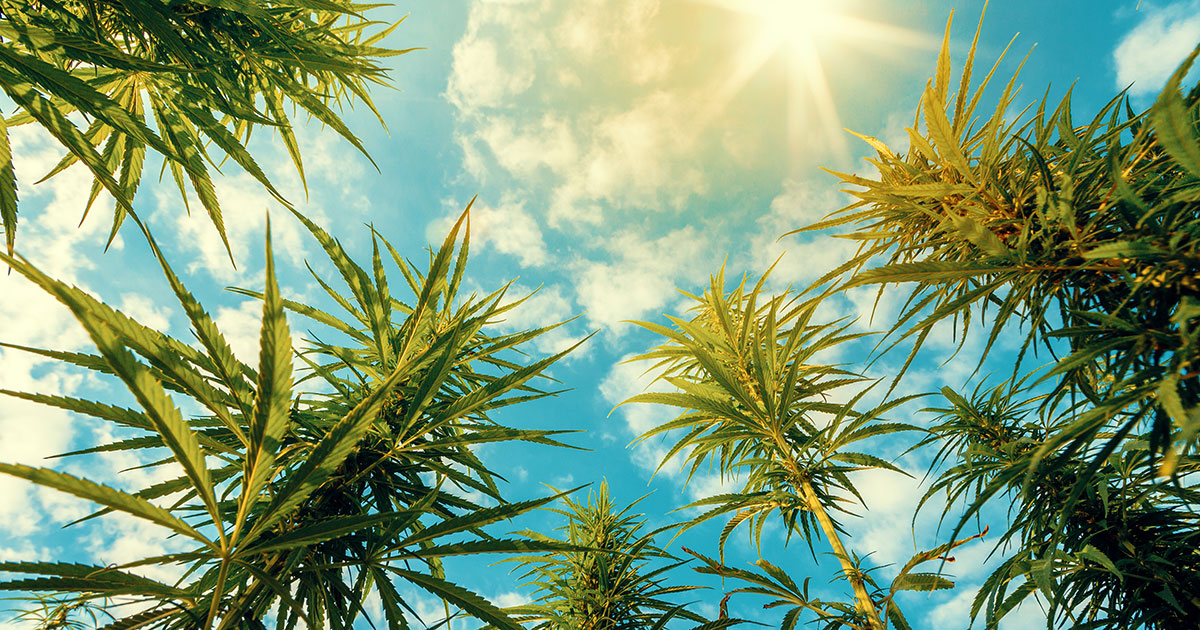
Across Wisconsin, state residents and visitors can enter gas stations, liquor stores, and supermarkets and purchase hemp-derived products marketed as containing tetrahydrocannabinol (THC). Wisconsinites also can consume these hemp-derived products at local pubs or have them shipped directly to their doors. More often than not, individuals participate in Wisconsin’s hemp market without having to present identification establishing that they are adults.
In this emerging and ever-evolving industry, many individuals are unsure why intoxicating hemp-derived products are not only legal but also easily accessible, and some people are unaware this market exists at all. Adding to this confusion, the federal government recently enacted legislation that will entirely change how the country addresses hemp products.
Hemp’s Pathway to a Legal Market
Even though cannabis and hemp originate from the same plant, Cannabis sativa L., they are on two separate legal and regulatory tracks. In December 2018, the federal government enacted the Agriculture Improvement Act of 2018,[1] commonly referred to as the 2018 Farm Bill. The 2018 Farm Bill was the catalyst for the distinct treatment of hemp and cannabis and related products by regulators, legislators, and enforcement agencies. Among other things, the 2018 Farm Bill distinguished hemp from cannabis by reclassifying hemp as an agricultural commodity and removing it from the Controlled Substances Act.[2] In doing so, the bill defined hemp as cannabis containing less than 0.3% delta-9 THC on a dry weight basis. The bill also provided that states and tribes cannot prohibit interstate transportation or shipment of lawful hemp and hemp-derived products.
 Kristina (Krissy) Atterholt, U.W. 2022, is an associate with Amundsen Davis LLC, Milwaukee, practicing in the Real Estate, Zoning & Public Finance and Cannabis, Hemp & CBD service groups. She represents clients in commercial, industrial, residential, food and beverage, cannabis, hemp, and cannabis plant adjacent industries. Well versed in helping individuals and businesses navigate nuanced state and local government processes, she is adept at advising clients facing licensing, regulatory, land use, and zoning issues. She is a member of the State Bar of Wisconsin’s Young Lawyers Division.
The 2018 Farm Bill singled out and restricted an allowable amount of one of the primary cannabinoids found in the cannabis plant, delta-9 THC. Delta-9 THC is known within the cannabis industry and by consumers for its intoxicating effect. The bill’s silence on limiting or prohibiting other cannabinoids opened the door for legal products containing other intoxicating cannabinoids, such as delta-8 THC and delta-10 THC, and nonintoxicating cannabinoids, such as cannabidiol (CBD), at any amount so long as the product contains an amount of delta-9 THC less than the federal 0.3% limit. Processors can still concentrate delta-9 THC to create intoxicating effects without exceeding the federal limit, which is why consumers can still find delta-9 THC products. If a product contains more than the allowable amount of delta-9 THC, regardless of its labeling as hemp or otherwise, that product is deemed cannabis and illegal under federal and Wisconsin law.
Whether intentionally or not (legislators claim both), the 2018 Farm Bill made possible a legal hemp-derived-product market. Hemp growers, manufacturers, and retailers never looked back, and neither have consumers. Wisconsin’s decision to neither decriminalize nor regulate cannabis has further driven consumers interested in cannabis plant products to the accessible hemp market. Now, edible, drinkable, transdermal, and inhalable hemp-derived goods line Wisconsin shelves and e-commerce markets.
Current Legal Framework for Hemp
Federal. Under federal law, hemp is legal for now. The U.S. Department of Agriculture (USDA) and the U.S. Food and Drug Administration (FDA) are two agencies maintaining some oversight over hemp and hemp-derived products.
The 2018 Farm Bill tasked the USDA with overseeing hemp cultivation and developing the U.S. Domestic Hemp Production Program. The program offers two production pathways to grow hemp in the U.S. The first permits the USDA to approve state and tribal hemp-production plans. The second created a federal plan for states and tribes without USDA-approved plans to implement, so long as hemp is legal in that state. The USDA program only controls hemp cultivation; it does not regulate or license hemp processors or retailers.
While the USDA regulates hemp cultivation, the FDA regulates hemp-derived products marketed as a drug, food, dietary supplement, or cosmetic. The FDA prohibits individuals from marketing hemp-derived products as dietary supplements or as intended to have a therapeutic or medical use, including claims that a product treats, mitigates, prevents, or cures diseases, without first obtaining FDA approval verifying those claims. The FDA also enforces that hemp-derived products cannot be labeled with false or misleading information, contaminated, or adulterated. The FDA has sent warning letters to persons violating these restrictions, demanding that unlawful products be removed from the market.
The FDA deals a bit differently with CBD, which often contains trace amounts of THC and is considered nonpsychoactive, than it does other THC-forward products. Unlike other cannabinoids, the FDA has approved a CBD drug to treat seizures associated with Lennox-Gastau syndrome, Dravet syndrome, and tuberous sclerosis complex. No other hemp-derived or cannabis product has obtained FDA approval to date.
Wisconsin. To bring Wisconsin law in compliance with the 2018 Farm Bill, the Wisconsin Legislature enacted 2019 Wis. Act 68. But even before that, Wisconsin, through the Department of Agriculture, Trade and Consumer Protection, had launched a hemp pilot program in 2017, per 2017 Wis. Act 100. 2017 Wis. Act 100 was the state’s response to the 2014 Farm Bill, which authorized higher-education institutions and state agriculture departments to grow and cultivate industrial hemp so long as state law permitted hemp production and production was performed for research purposes. Beginning in 2022, however, Wisconsin elected to discontinue its hemp program. As a result, the USDA now regulates Wisconsin hemp growers per the federal Hemp Production Program.
Wisconsin has taken an approach to CBD similar to that of the FDA and recognizes CBD for having some medicinal value. 2013 Wis. Act 267, commonly referred to as Lydia’s Law, allows the use and possession of CBD products if dispensed by a pharmacy or physician for certain medical conditions and requires physician certification to do so. In response to the 2018 Farm Bill, Brad Schimel, who was Wisconsin’s attorney general at the time, wrote a memo instructing state agencies that lawful production of CBD products and retail sale of such lawful products are permitted and should not be prosecuted.[3]
With the hemp industry up and running in Wisconsin and nationwide, the federal government has returned years later with sweeping legislation threatening to eliminate the very industry it is responsible for creating.
It is unclear how the impending federal prohibition would affect the implementation of the regulatory framework established by AB 606, SB 644, and AB 680, but it could be the state’s path toward bypassing federal prohibition.
Eventual Return to Federal Prohibition
The federal government shutdown in the summer and fall of 2025 led to the looming – and almost certain – extinction of legal hemp-derived THC products nationwide. On Nov. 12, 2025, President Trump signed legislation to end the federal government shutdown.[4] A part of this spending package was a provision in the 2026 Agriculture, Rural Development, Food and Drug Administration and Related Agency Appropriations Act (Appropriations Bill)[5] to effectively ban most, if not all, hemp-derived products.
The Appropriations Bill will redefine hemp and establish a threshold of total THC in products, including THCA, at 0.3% at dry weight. Unlike the 2018 Farm Bill, the definition does not solely restrict the amount of delta-9 THC. Instead, it applies to and caps all THC. The bill also prohibits finished products from containing more than 0.4 milligrams of total THC per container. Keep in mind that many hemp-derived edibles begin at 2.5 milligrams per serving. Further, the bill will outlaw synthetic cannabinoids, such as delta-8, and cannabinoids incapable of being naturally produced by the cannabis plant at any level. Products outside the legal definition of hemp will be classified as cannabis, which is a Schedule 1, federally illegal drug. This classification will affect interstate commerce of hemp-derived products, criminal liability of producers, retailers, and consumers, and state and local cannabis regulation’s governance over these products. These provisions will go into effect on Nov. 12, 2026.
Within 90 days after the Appropriation Bill’s enactment, the FDA and other agencies must publish a list of all cannabinoids known to be naturally produced by the cannabis plant, all THC class cannabinoids, and all other cannabinoids with similar effects as THC class cannabinoids.
As prohibition threatens to upend access to products, dismantle farming operations, and eliminate hemp jobs and businesses, many hemp stakeholders and consumers have demanded that legislators save the billion-dollar industry they have come to rely on. Legislators and hemp stakeholders are attempting to end prohibition – or at the very least ensure that states remain authorized to regulate hemp as they see fit without federal government interference, similar to how the federal government interacts with states’ legal cannabis programs.
Because federal authorities are not bound by state or local laws and ordinances, they can arrest and charge individuals for violations of cannabis-related crimes under federal law. The only reason state-legal cannabis markets have avoided interference is because the federal government has chosen to avoid meddling with state-sanctioned cannabis operations and activities. Neither the federal government nor state agencies afford the same protections for individuals acting outside of the law. Importantly, there is no guarantee that state hemp programs will be treated the same as cannabis programs or that the federal government decision-makers will not change their minds and insert themselves in states’ legal cannabis activities.
Time will tell as to the exact effect this federal ban will have on states that have implemented a legal hemp regulatory framework. Until November 2026, the hemp market is business as usual.
Wisconsin’s Response to Intoxicating Hemp Products
Many of the finer details of regulating hemp-derived products have been left to individual states and local governments. In response to this legislative gap, several states have enacted intoxicating hemp-derived product prohibitions, while others have prohibited only select cannabinoid products. Some states have established a legal regulatory framework for these products, many of which contain potency limitations, labeling and child-proof packaging requirements, restriction of sales to minors or those under 21 years of age, product testing, and a licensing process for manufacturing and retail sales of hemp and hemp-derived products. And, finally, some states have done nothing.
Although Wisconsin state officials have mainly chosen to sit on the sidelines for intoxicating hemp-derived product regulation, some local governments have enacted ordinances to address hemp-derived-product retail sales. Some ordinances require that hemp-derived-product retailers be at least a specified distance from schools, hospitals, childcare centers, churches, and similar locations and restrict sales to people 21 years of age and older. Wood County, the cities of Marshfield, Pittsville, Nekoosa, and Kaukauna, and the town of Grand Rapids are some of the local governments that took action in the early 2020s to regulate hemp, and that approach at the local level has persisted. In 2025, Milwaukee passed an ordinance prohibiting the sale of hemp-derived THC products to persons under the age of 21.[6] Also in 2025, Madison enacted an ordinance banning hemp-derived cannabinoid products sales to persons under 21 years of age and restricting retailers from being located within a quarter-mile of a youth-serving organization.[7]
At the state level, there has been an uptick in hemp-related legislation. Wisconsin Assembly Bill 503 (AB 503)8 aims to redefine hemp in a similar fashion to the Appropriations Bill. AB 503 would define hemp as the cannabis plant containing a total THC, including THCA, of not more than 0.3% in the plant on a dry weight basis. The definition would include industrial hemp and exclude prescription drugs approved by the FDA, synthetic cannabinoids, or those not capable of being naturally produced by the cannabis plant, and other cannabinoids that have similar effects or marketed as having such effects as THC. Enacting this legislation would align the state with federal policy and could introduce the ban on hemp-derived products in Wisconsin ahead of federal prohibition.
Wisconsin Assembly Bill 606 (AB 606) takes a regulatory approach to hemp-derived cannabinoid products (HDCs). AB 606 would create a regulatory framework for the manufacturing, distribution, and retail sale of these products similar to how the state regulates alcohol. Under this bill, the Wisconsin Department of Revenue’s (DOR) Division of Alcohol Beverages would become the Division of Intoxicating Products and have jurisdiction over HDC licensing, regulation, and enforcement as well as alcohol. The bill would, among other things, restrict sales to persons under 21 years of age, limit product potency based on their form of ingestion, require product testing, establish safe packaging and label standards, and require product registration with the DOR.
Wisconsin Senate Bill 644 and Wisconsin Assembly Bill 680 (collectively, the Bill) also take a regulatory approach. The Bill would distinguish intoxicating cannabinoids, including delta-9 THC, delta-8 THC, delta-10, THCA, HHC, THCP, and any other intoxicating cannabinoids or derivatives, from nonintoxicating cannabinoids, including CBD and other non-THC cannabinoids that do not produce intoxication at typical serving levels. The Bill would recognize intoxicating products as beverages with intoxicating cannabinoids at a concentration of 1.0 milligrams or more per 12 fluid ounces or edibles with 1.0 milligrams or more per serving or per package. The Bill would additionally prohibit individuals under 21 years of age from possessing intoxicating hemp-derived products and retailers from selling these products to individuals under 21 years of age. Further, the Bill would require product testing, safe packaging and labeling, and retail training for intoxicating hemp-derived products sales.
It is unclear how the impending federal prohibition would affect the implementation of the regulatory framework established by AB 606, SB 644, and AB 680, but it could be the state’s path toward bypassing federal prohibition.
As far as enacted state legislation goes, 2023 Wis. Act 73 (Act 73) introduced the most significant hemp-derived product market consequences to date. Act 73 requires electronic-vaping-device retailers, including those who sell vape devices containing hemp, to obtain a retail license from the municipality they operate within. It further prohibits the sale of electronic vaping devices containing hemp unless that product is registered with the DOR. DOR registration will require the device manufacturer to submit a certificate of analysis from an independent laboratory establishing that the device does not contain nicotine. Hemp electronic vaping device registration requirements take effect July 1, 2026, and retailers can sell these unregistered products until that time. Act 73’s impact may be short-lived and moot by November 2026.
Conclusion
Wisconsin’s response to hemp-derived products will further cement the state’s stance on its residents’ right to access the cannabis plant and products derived from the plant. For the time being, it appears that the state will embrace prohibition unless it takes action to regulate the market and the federal government recognizes that course of action. Federal legislators also have time to enact legislation to change the course of prohibition before it strikes in November 2026.
Endnotes
1 Agriculture Improvement Act of 2018, Pub. L. No. 115-334, 132 Stat. 4490.
2 Pub. L. No. 91-513, 84 Stat. 1242 (1970) (codified at scattered sections of 21 U.S.C. title 13).
3 See Ryan LeCloux, Regulating Wisconsin’s Hemp Industry, Wis. Pol’y Project vol. 2 # 9 (Aug. 2019), https://docs.legis.wisconsin.gov/misc/lrb/wisconsin_policy_project/wisconsin_policy_project_2_9.pdf.
4 Continuing Appropriations, Agriculture, Legislative Branch, Military Construction and Veterans Affairs, and Extensions Act, Pub. L. No. 119-37, 139 Stat. 495 (2025).
5 Id. div. B.
6 Milw. Ordinance 105-50.5.
7 Madison Ordinance 23.202.
8 Information about the Wisconsin Legislature’s 2025-26 session, including text of recently introduced proposed legislation, can be obtained at https://docs.legis.wisconsin.gov/2025.
» Cite this article: 99 Wis. Law. 26-30 (January 2026).
