
Three weeks after Jacob Gardner opened his solo practice in Monroe, his schedule was nearly full. Once the word was out, calls flooded in from Green, Iowa, Lafayette, and Grant counties.
Gardner hung out his shingle on Nov. 3, 2025, just one-and-a-half years into practice. “It’s been a little overwhelming in the best possible way,” Gardner said. “The courts are throwing appointments at me. I’m staying busy and I think I’m doing good work. It’s made me realize I made the right decision to go solo” in Monroe.
Gardner is one young attorney – but he is among many actively working on solutions for a reality they’ve witnessed: the loss of access to justice because of the lawyer shortage in Wisconsin’s rural areas. The issues include recruitment and retention, too many conflicts, and of course, too few lawyers.
Many in Wisconsin and elsewhere seek to find workable remedies that lead to long-term solutions for these issues, including the Wisconsin Supreme Court, the State Bar of Wisconsin, the law schools, and individual lawyers and law firms.
What the Wisconsin Supreme Court Is Doing
The serious shortage of attorneys working in rural areas of Wisconsin is well documented and has been discussed by many people and entities for years – one of the latest being the Wisconsin Supreme Court’s Attorney Recruitment and Retention Committee.
Then-Chief Justice Annette Ziegler established the committee in 2024. Participants include members of the supreme court, circuit court judges, including those also serving as judicial district chief judges, the Access to Justice Commission, deans of law schools in Wisconsin, the State Public Defenders (SPD) Office, the Wisconsin District Attorney Association, the Wisconsin Board of Bar Examiners, a district court administrator, and State Bar representatives and liaisons.[1]
In November 2025, the committee released its
report and recommendations on those issues throughout Wisconsin. First among its recommended strategies is improving attorney availability “particularly in high-need areas.”[2]
The committee concluded that attorney rural recruitment programs in other states and programs designed to attract physicians and teachers to rural Wisconsin offer models that could reduce the lawyer shortage. Increasing hourly rates for private attorneys accepting SPD case appointments may improve willingness to cover rural areas – especially to cover travel expenses. Expanded use of remote technology for more hearings promises to increase representation, if hardware, bandwidth, and technical training are available.[3]
Other recommended strategies noted in the final report involve increasing the supply of attorneys in Wisconsin, creating avenues for non-attorney professionals to provide legal services, and “utilizing existing legal resources as efficiently as possible.”
The committee delegated each recommendation to specific committee representatives for further investigation, and it plans to meet in a year to see what those committee members have discovered in studying the recommendations.[4]
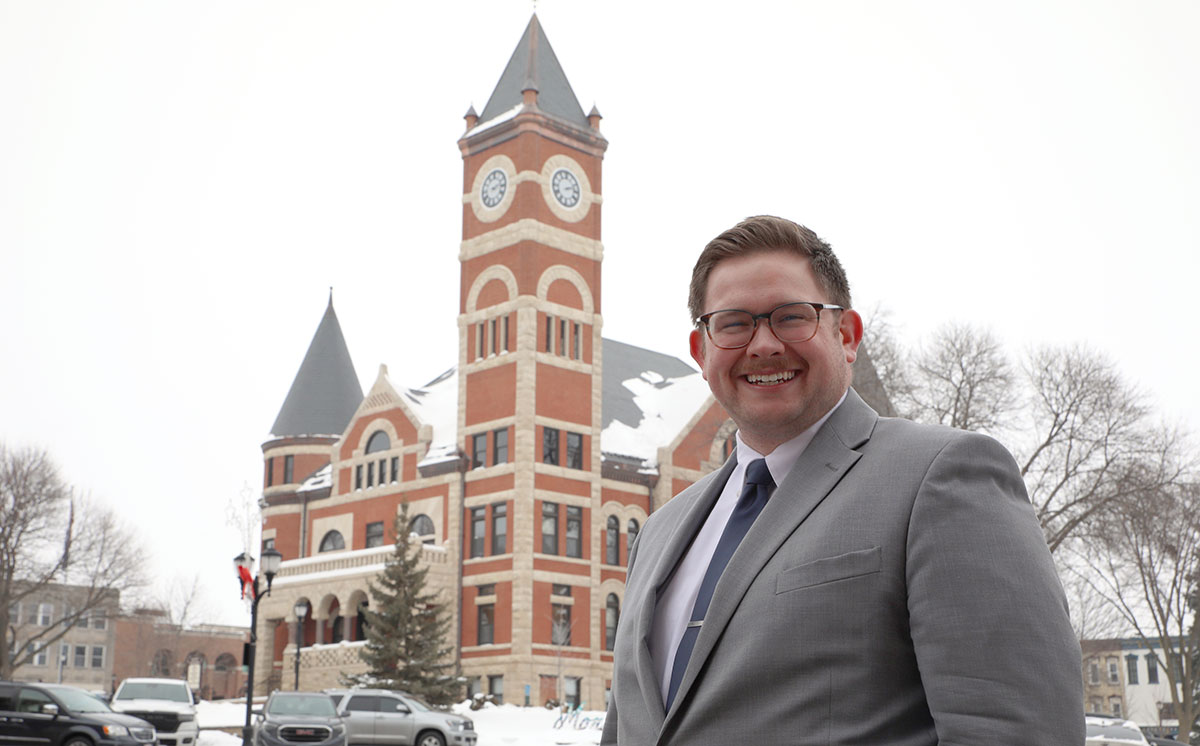
Three weeks after Jacob Gardner opened his solo practice in Monroe, his schedule was nearly full. He opened his office just a year and a half into practice.
What the State Bar of Wisconsin Is Doing
In the past, the State Bar hosted a rural bus tour, taking prospective attorneys to several counties to introduce them to the local bar association members. The tours ran from 2016 to 2018 and resulted in establishing connections among participants.
More recently, the State Bar has initiated two programs to address the issue: the
Rural Clerkship Program and the
Rural Practice Development Program.
The State Bar
Rural Clerkship Program connects Wisconsin and Minnesota law students with rural employers offering a limited-term, full-time, paid summer employment opportunity. Employment typically lasts eight weeks, starting after the end of the spring semester. The program is now in its third year. You can find out more at
WisBar.org/RuralClerkship.
The goal of the State Bar
Rural Practice Development Program is to recruit three attorneys each year over four years to establish their practices in rural Wisconsin. The program provides cash grants and other benefits to lawyers making a two-year commitment to rural practice.
Each recipient who commits to live and practice law in rural Wisconsin for at least two years will receive a $5,000 award at the start and another $5,000 upon completion of a minimum two-year commitment. Eligible recipients include attorneys who open a practice or begin full-time work at a firm or a governmental or nonprofit entity and must live within a geographic area defined by the program in counties with less than one attorney per 1,000 residents. Watch for updates and program deadlines this spring at
WisBar.org/RuralPracticeDevelopment.
This program is possible thanks to a $250,000 gift to the
Wisconsin Law Foundation from Wisconsin attorney Kathryn Bullon – the Law Foundation’s largest-ever donation.
For Bullon, the reason for her donation was seeing that the “lack of access to lawyers jeopardizes the ability of people to obtain legal guidance in everything from buying or selling a home, creating a valid will and estate plan, running a business, to crafting powers of attorney to provide for their own future care and that of loved ones whose competence may be or may become impaired.”
“This access gap creates unacceptable stress, uncertainty, and potentially legal jeopardy for the people who live in areas without adequate representation. The practical, everyday impacts of not having access to local and trusted legal counsel pretty much sum up the problems facing people who live in underserved communities,” Bullon said. “And of course, that is what drives the State Bar’s efforts to try to find workable remedies that lead to long-term solutions.”
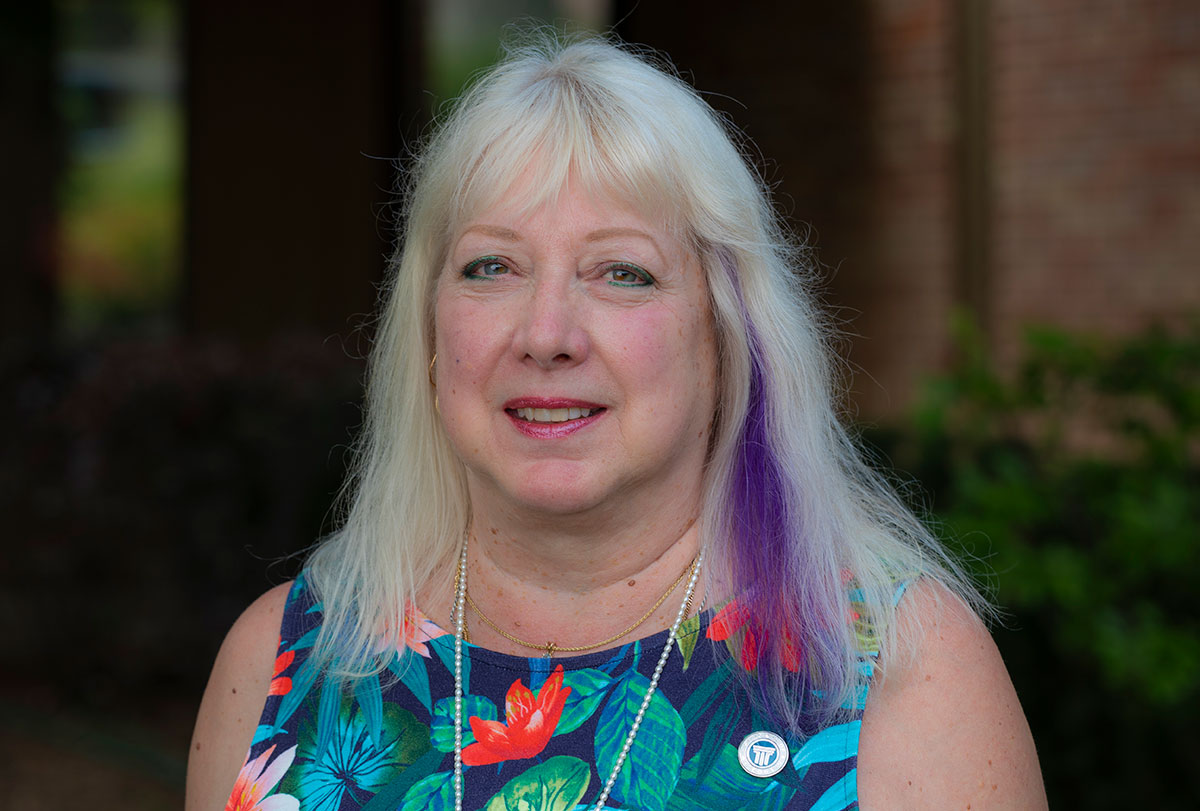
Kathryn Bullon’s generous donation will boost access to justice in rural areas of Wisconsin.
One of the program’s initial three participants is Wassim Malas, who left Milwaukee to be an associate with Bender, Larson, Chidley, Koppes, Hetfield & Associates in Watertown. He joined the firm on Sept. 29, 2025.
Choosing law to help people, Malas decided to pursue a rural practice after learning of Wisconsin’s “legal deserts.” The Rural Practice Development Program was his pathway.
He knew his move was the right one for him when he overheard, at his first Jefferson County Bar Association meeting, someone say “Attorney X is retiring? That’s the last thing we need.” “That moment underscored just how urgent it is for new attorneys to step into the roles retiring ones leave behind,” Malas said.
He enjoys his practice in estate planning. “Making sure families are provided for is one of the most rewarding parts of my job. I come from a family of seven, but out here that’s modest by comparison. It warms my heart to work with these large families,” Malas said.
“While life can be just as hectic for lawyers out here, I find I am more at peace living among Wisconsin’s greenery,” he said.
What Individual Lawyers and Law Firms Are Doing
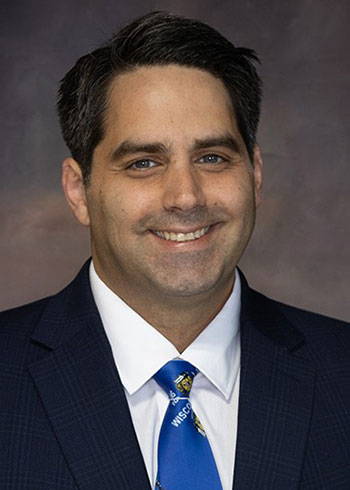
Wassim Malas, a participant in the State Bar’s Rural Practice Development Program.
Individual lawyers and law firms are also actively seeking solutions to the lawyer-shortage crisis.
Designing a firm for rural practice. Gardner’s new practice in Monroe is designed to take on court appointments and small-business and family-law cases with low overhead and high flexibility. “I want to help small businesses, families, and children. My practice requires a willingness to drive (to court, to meetings with schools, to meetings with minors), but the work is rewarding, and every mile is worth it,” Gardner said.
His real passion is working as a guardian ad litem (GAL). “The most noble client to have is a child, to be working in their best interest. I love the work and connecting with kids pulled into this complex system.”
Gardner grew up in Beaver Dam. As a 3L seeking his first job, he applied at Duxstad McDaniel Law Group S.C., in Monroe. “Quite a few attorneys had lots of positive things to say about Daniel Bestul and Robert Duxstad – in terms of mentoring,” Gardner said.
The Monroe location was ideal: “It strikes the balance between my desire for quiet and nature, and being near my Madison-based family members,” he said.
Firm culture fostering retention. Daniel Bestul is a shareholder with Duxstad McDaniel Law Group S.C. (where Gardner got his start). Their aim is to bring in new lawyers and give them a solid foundation for a career in rural practice.
Bestul knows the difficulty of recruiting attorneys to rural areas – and to counter that difficulty, firm leaders at Duxstad start early. They recruit new attorneys via the law schools’ on-campus hiring events in September each year, “so we are on the radar screen of 3Ls looking for jobs,” Bestul said.
They ask for a three-year commitment from their new attorneys. “We see that as the length of time it really takes to fully understand what it means to be a lawyer in a rural area,” Bestul said. “Hopefully they stay, but even if they don’t, we’ve provided them with a good foundation for the next stage of their career.”
What brings them in? A promise of robust mentoring. “Our experienced attorneys work closely with new attorneys,” he said. “Our goal is to get new lawyers on their feet as practitioners as well as introduce them to running a law firm. A big part of the plan is to get them clients and into court early on.”
There’s recruiting, and there’s retention, which also is a challenge. During those first years, it’s about “getting young attorneys to understand the great benefits of being in a rural area – and it is a different lifestyle than Milwaukee or Madison.”
One solution is becoming involved in the local area – to encourage them to know they belong there. “Our firm’s mission statement says we have responsibilities as civic leaders. We encourage our new attorneys to get involved in the community and make connections here – that this is an important part of rural practice,” Bestul said. That means finding a niche in the local area, such as serving on local boards and doing other volunteer work. “You need to make connections with people you see every day.”
For Duxstad associate Sam Tooley, the firm’s solid support has been critical. “The level of support from this firm has kept me here. In a rural community, the mentorship is important, but just as critical is having skilled, dedicated support staff – something my practice areas absolutely rely on. I have put down roots quickly with a new home. Altogether, the firm’s overall approach to bringing in and supporting new attorneys has made a long-term commitment feel both practical and worthwhile.”
David Ewert is another Duxstad firm associate; for him, the opportunity for mentorship was a key factor in his decision to come to Monroe. “I didn’t pick the firm for its rural setting, but because it offered access to experienced, knowledgeable attorneys who take mentorship seriously, prioritizing professional development just as much as the finished work. I stay because I’ve been able to take on important work early on, but always with enough support that I’m never thrown into the deep end before I’m ready. When I have a difficult case or situation, I have people to turn to.”
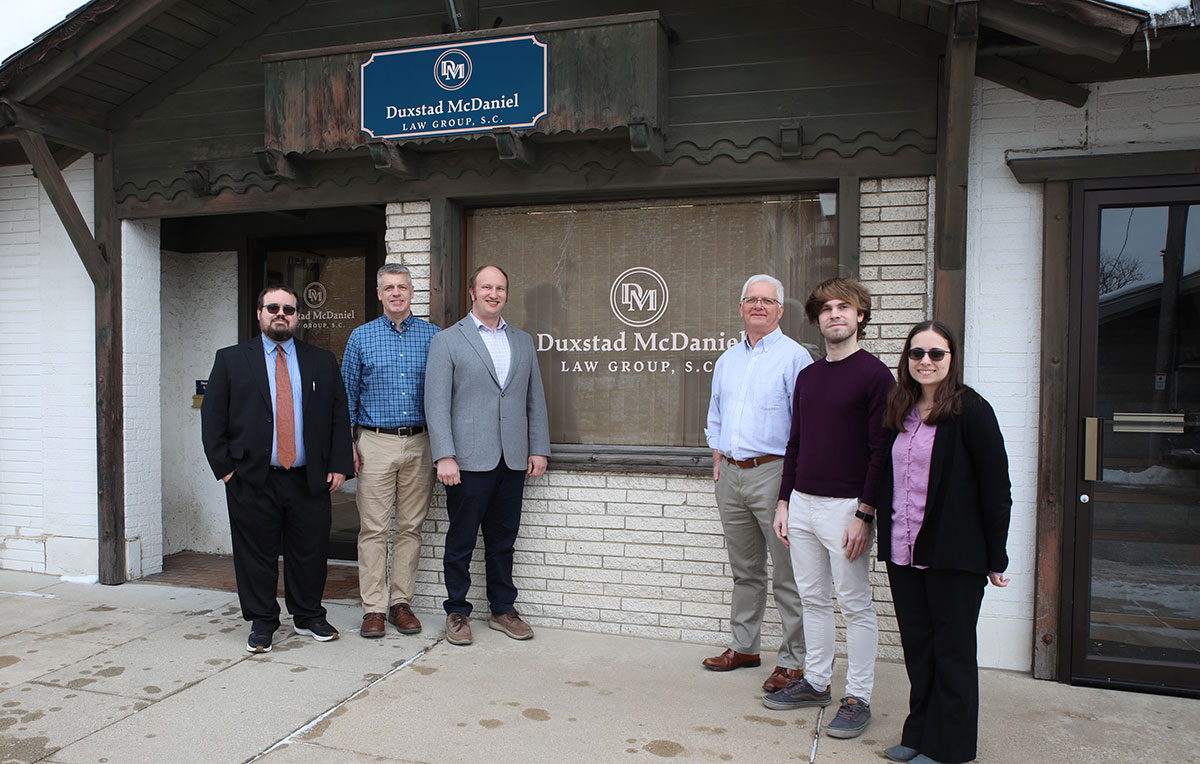
Lawyers with Duxstad McDaniel Law Group SC in Monroe include (from left): Sam Tooley, associate; Lance McNaughton, managing shareholder; David Ewert, associate; Dan Bestul, shareholder; Henry Morris, associate; and Amber Fuerbringer, associate.
Keeping small-town firms open. Nathan Russell is managing attorney and owner of Russell Law Offices s.c., based in Shullsburg, in Lafayette County. The firm’s business model is unique in the rural practice environment.
Russell’s plan is to grow by adding both associates and experienced attorneys – and through a mixture of opening new firms and purchasing and merging with existing solo and small firms in danger of closing, nearly all in rural areas of the state.
About five years ago, the firm had two offices and two attorneys. Today, it has 11 locations around southern Wisconsin, including Brodhead, Cuba City, Darlington, and Platteville, and in Illinois. It employs 14 attorneys, from senior managers to new associates. “We are still in the embryonic stages of our firm, since we are so new to this business model,” Russell said.
 Jay D. Jerde, Mitchell Hamline 2006, is a legal writer for the State Bar of Wisconsin, Madison. He can be reached by
email or by phone at (608) 250-6126.
Jay D. Jerde, Mitchell Hamline 2006, is a legal writer for the State Bar of Wisconsin, Madison. He can be reached by
email or by phone at (608) 250-6126.
 Shannon Green is communications writer for the State Bar of Wisconsin, Madison. She can be reached by
email or by phone at (608) 250-6135.
Shannon Green is communications writer for the State Bar of Wisconsin, Madison. She can be reached by
email or by phone at (608) 250-6135.
The model is specifically designed to deal with the growing shortage of rural lawyers. “We are reaching a crisis level with being able to provide quality legal services to rural communities. I know a lot of attorneys across the state, and while all seem overwhelmed, those in rural areas can barely come up for air. There is so much work that needs to be done. It is such a struggle just to understand where to start,” said Russell.
“Clients have to wait unhealthy long times to get services, if at all, or travel a significant distance to get the services that they should be able to get locally.”
Purchasing existing firms keeps them open where they may otherwise close due to a lack of attorneys. “I hatched this concept while in law school,” and implemented it about five years ago – prompted by the death at age 77 of a local attorney who had retired just the year before. “That made me reevaluate what I was doing,” Russell said. He started the new strategy just before the COVID-19 pandemic. But the resulting increased use of videoconferencing and other online services dramatically altered how law was practiced. “It allows our business model to flourish,” he said.
Key to success, of course, is recruiting new associates. “Having a clerkship program is our best chance to sell ourselves to top prospects and expose them to our firm and our communities. We also like to identify prospects originally from smaller communities and those with service-industry backgrounds, and candidates who have an entrepreneurial spirit.”
Finding the right fit with recruits and a law firm culture that mixes small- and large-firm elements are the keys to retaining new associates in rural areas, Russell said. “Each attorney operates their own mini-solo practice while not needing to handle collections, HR, and other administrative issues – while still having certain standards and the ability to get mentorship from others.”
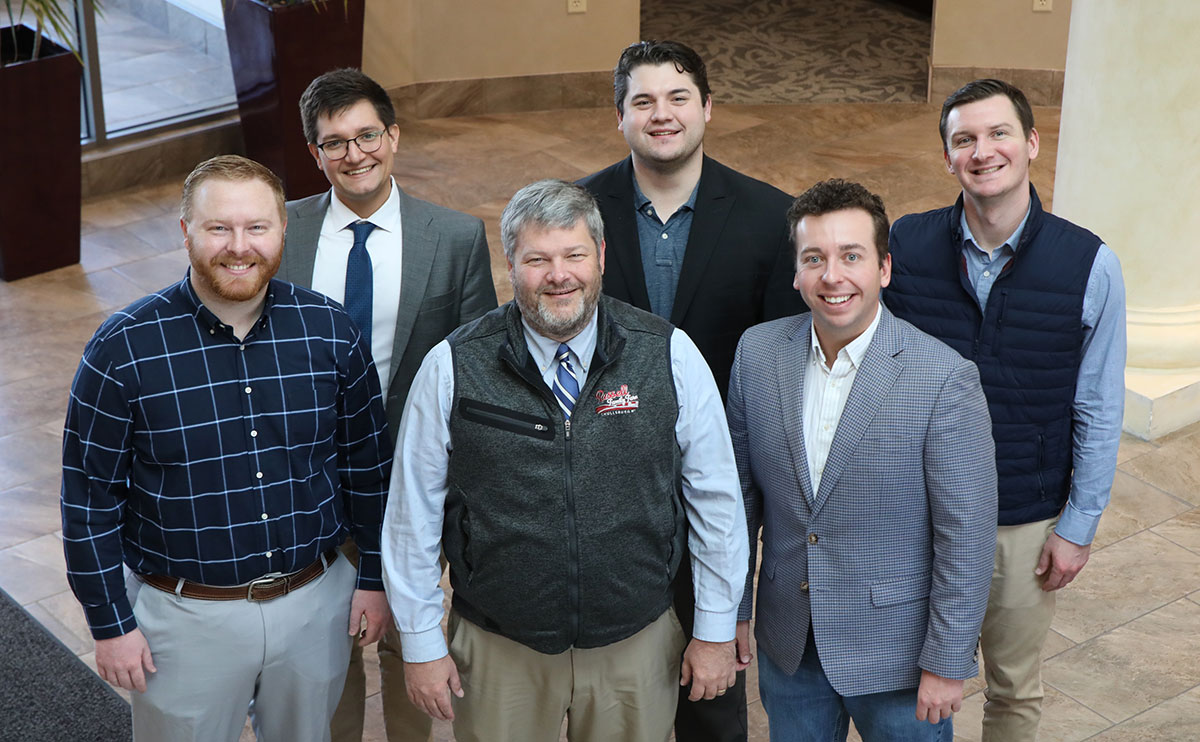
Members of Nathan Russell’s team include, from left, front row: Jace Wade, associate; Nathan Russell, president; Laine Carver, senior associate; back row: associates Nathaniel Yackel, Sam Goaley, and Maciej Czerlonko.
What Wisconsin Law Schools Are Doing
Wisconsin’s two law schools see opportunities outside their host cities and encourage connections.
Erin M. Binns, assistant dean of Career Planning at
Marquette University Law School, grew up in the rural community of Manitowoc.
“I appreciate the value of living in those communities,” Binns said.
Marquette’s Career Planning Center engages students in “meaningful conversations about the true values that students can gain in, for some, taking that risk and going to a community where they don’t know anybody and have no connections,” Binns said.
In February 2026, an event called Beyond Milwaukee will bring representatives from counties throughout the state to describe “what it means to live and practice there.” A career fair will offer one-on-one discussions.
These visitors represent private practice, public service, and government – all available outside Dane County and Milwaukee.
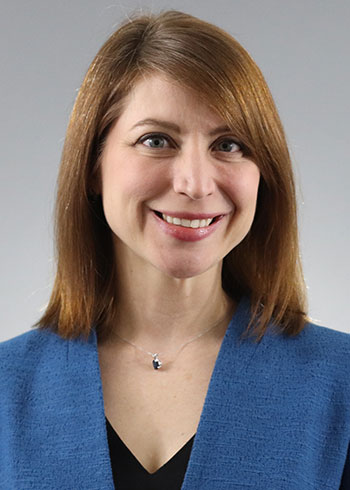
Emily D. Kite, associate dean for Career and Professional Development, UW Law School.
The
University of Wisconsin Law School sponsors similar events. Annual programs that bring students to Jefferson County and to the Fox River Valley are reaching out into other areas, said Emily D. Kite, associate dean for Career and Professional Development.
“Even though Jefferson County is not far from Madison, I think it’s … outside of the realm where students are thinking about practicing until we let them know about the opportunities that are available there,” Kite said.
Last fall, the UW Law School hosted representatives of the Marathon County Bar Association on campus after “they approached us about wanting to get in front of students, and we were really excited to work with them,” Kite said.
The conversation revealed to the lunchtime audience opportunities in “wider Wisconsin,” Kite said, and more importantly for students, that they will find young professional colleagues in these communities.
A virtual program, currently in development, promises to expand contacts across the state, Kite said.
These meetings help students see professional opportunities and advantages of living in the community.
Marquette encourages community representatives to “highlight parts of their community” and the firm’s culture, Binns said.
Sometimes, it’s teaching about unexpected geography. “We’re only this many miles from Lambeau Field or from the Twin Cities,” Binns gave as examples.
At both schools, one-on-one conversations bring out the lawyer-to-be.
The student can identify “what they value as a law student or what they anticipate valuing in their early years of practice,” Binns said, and “rural practice potentially fitting into those values and goals in ways that the student hadn’t thought of.”
Kite reinforces the “holistic approach” her office offers students in “individualized advising” that provides information and resources to make those choices possible.
“We want to present them with a buffet of opportunities,” Kite said.
The UW Law School includes on-campus interviews, Kite said, with firms from Black River Falls, Fond du Lac, Oshkosh, Janesville, and Wausau.
Similarly, Binns regularly has “phone calls with lawyers in rural communities looking to see how we can support them in their recruitment efforts.”
Many smaller firms don’t advertise, Kite said, because they don’t have recruitment resources. The UW Law School’s Office of Career and Professional Development encourages students to reach out to lawyers.
In the countryside, big-law issues await. A Marquette lawyer practicing in Ashland, Binns said, spoke to students last year about his “thriving practice with some really complex federal and state work.”
That includes local manufacturing corporations, “high-net-worth individuals,” and “complex succession and business planning, and contracting” for large farms throughout the state, Binns said.
“We know there’s a huge need in the areas of public defense and prosecution. I think that’s what a lot of people think of when they’re thinking about the shortage of attorneys,” Kite said.
“But we certainly need people to be doing business law, trusts and estates, personal injury. Anything we practice anywhere else needs to be practiced in areas of rural Wisconsin.”
Examples of Rural Practice Programs in Illinois, North Dakota, and South Dakota
Sources
Ill.: Illinois State Bar Ass’n,
Rural Practice Fellows,
https://www.isba.org/ruralpractice/fellows-list (last visited Nov. 26, 2025); Angel Wawrzynek,
Rural Practice Fellowship Program Update, The Bar News (July 7, 2025),
https://www.isba.org/barnews/2025/07/ruralpracticefellowshipprogramupdate.
N.D.: N.D. Cent. Code §§ 27-02.2-01 to -13; Sally Holewa, North Dakota State Court Administrator,
Report to House Judiciary Committee Regarding Rural Attorney Recruitment Program 1-2 (Apr. 22, 2022),
https://ndlegis.gov/files/committees/67-2021/23_5143_02000presentation_1135.pdf; State of North Dakota Courts,
Rural Attorney Recruitment Program,
https://www.ndcourts.gov/rural-attorney-recruitment-program.
S.D.: S.D. Codified Laws §§ 16-23-1 to -11; South Dakota Unified Judicial System,
Rural Attorney Recruitment Program,
https://ujs.sd.gov/for-attorneys/rural-attorney-recruitment-program/.
What’s Being Done in Other Midwestern States
Midwestern states encourage rural practice in different ways, usually through providing opportunities and financial incentives to lawyers willing to serve rural communities. State bar associations often play a role (see table).
Governments have also stepped up.
North Dakota’s and South Dakota’s similar Rural Attorney Recruitment programs, supported in part by state and local governments, allow rural counties and villages to apply to the state supreme court as locations seeking new rural lawyers. Lawyers receive annual stipends conditioned on staying five years.[5]
Iowa maintains two rural practice programs – the Rural Practice Program sponsored by the Iowa State Bar Association and Drake Law School’s Rural Access to Justice Initiative (RAJI), a program supported by donations from Drake Law School alumni.
The Iowa State Bar’s Rural Practice Program, which began in 2012, hosts a “Meet and Greet” event, tantamount to “speed dating” between law students and employers. The process can create job offers for 2L summer clerks or 3L job applicants.[6]
RAJI, which began in 2018, offers stipends to reduce financial barriers to rural clerkships and supports “a pathway to solo or small firm practice in rural Iowa towns” through mentorship, professional advice, assistance in obtaining initial client cases, a “start-up stipend in return for dedicated pro bono hours,” and “donated or low-cost office space, reduced overhead, and access to case management software.”[7]
Countering the Misconceptions of Rural Practice
“There are many opportunities for attorneys in rural Wisconsin to build a rewarding practice both professionally and financially,” Russell said.
“I understand that a lot of people like the allure of larger cities. I personally understand the desire of being in an area that may have more options of things to do, but if you don’t have the time to actually enjoy them, is it worth it?”
With a rural or small-town practice, he says, “you can be in our communities on the weekdays, and then you have time to go to the larger cities on the weekend with actual time to enjoy your time there.”
Gardner’s advice to new lawyers and those considering a rural practice: “Know that there is (a) a need for that service in a rural community, and (b) there is good work-life balance available in those rural communities while still earning a good living,” Gardner said.
“There’s plenty of work to be done, and its good work,” said Bestul.
These are the solutions in play in Wisconsin and beyond. What ideas do you have?
Endnotes
1
Wisconsin Supreme Court Attorney Recruitment and Retention Committee: Report and Recommendations 18-19 (Nov. 2025),
https://www.wicourts.gov/publications/reports/docs/arrcreport25.pdf.
2 Id. at 11-13.
3 Id. at 11-13, 16.
4 Id. at 3, 11-17.
5 N.D. Cent. Code §§ 27-02.2-01 to -13; S.D. Codified Laws §§ 16-23-1 to -11.
6 Iowa State Bar Ass’n,
Rural Practice Committee Program,
https://www.iowabar.org/?pg=RuralPracticeProgramJoin (last visited Nov. 26, 2025); Iowa State Bar Ass’n,
Iowa Rural Practice Program Frequently Asked Questions,
https://www.iowabar.org/?pg=RuralPracticeFAQS (last visited Nov. 26, 2025); University of Iowa, Off. of Strategic Communication,
Rural Clerkship Program Introducing Law Students to Small Towns Like RAGBRAI Stop Garner, Iowa Now (July 25, 2017),
https://now.uiowa.edu/news/2017/07/rural-clerkship-program-introducing-law-students-small-towns-ragbrai-stop-garner.
7 Drake Univ. Law School,
Rural Practice,
https://www.drake.edu/law/careers/resourcesforstudents/ruralpractice/ (last visited Nov. 26, 2025); Drake Univ.,
Drake Law School Launches Rural Access to Justice Initiative (Sept. 11, 2018),
https://news.drake.edu/2018/09/11/drake-law-school-launches-rural-access-to-justice-initiative/.
» Cite this article:
99 Wis. Law. 18-25 (January 2026).
