March 4, 2026 – Next month, two candidates from Milwaukee will square off for the post of State Bar of Wisconsin president-elect. In this Q&A,
Lisa Lawless and
Anna Muñoz discuss their ideas for meeting the challenges facing the State Bar, if elected.
Both candidates are lawyers active in Milwaukee. Lawless (Indiana 1992) is with Husch Blackwell LLP, and Muñoz (Marquette 2005) is with Brookdale Senior Living Inc.
You can learn more about the candidates in this
profile article, published in February.
The winner of the 2026 election in April will serve a one-year term as president-elect, then serve a subsequent one-year term as president starting July 1, 2027.
In your opinion, what makes a successful State Bar president?

Lisa Lawless: The purpose of the State Bar is to serve members and fulfill its duties set by the Wisconsin Supreme Court. A successful Bar president must have the commitment and drive to serve members, the profession, and the justice system. The president should have a deep and thorough understanding of the Bar’s role, duties, and powers, and should always be mindful that ours is a mandatory bar, with inherent duties and limitations.
A successful president will be an effective representative of Bar members, and a thoughtful communicator and listener. Among other things, this is shown and carried out by strong connections with all stakeholders, including Bar members, local bars, specialty and affinity bars, and Bar sections, divisions, committees, leadership, and Bar staff, and regional and national associations of bar leaders. A successful president will be a supporter of Bar staff and assist and support the Bar’s internal and external operations. The president also should be a strong steward of the Bar’s finances and mindful of the varied situations and practices of our members in the offering of services and setting fees. The president should help the Bar maintain and grow its services to members and to set goals for the Bar to enhance and improve its offerings to meet the current and future needs of members. Finally, a successful Bar president will work with leadership, staff, and members to meet unanticipated challenges and difficulties faced by the Bar, our members, and the legal profession.
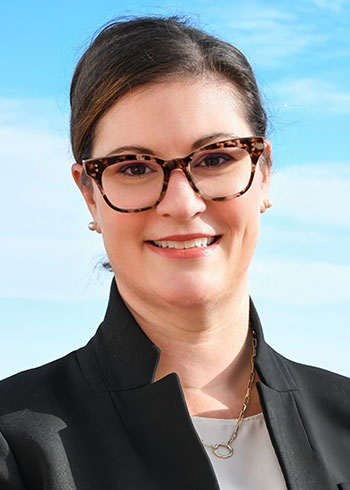 Anna Muñoz: A successful State Bar president embraces and advances the State Bar’s mission to support its “members in a dynamic and diverse society in delivering valued professional services, promoting access to justice and pursuing professional satisfaction.”
A successful State Bar president uses strong leadership and communication skills to support efforts that promote equitable access to opportunities, leadership, and resources, and that foster a culture of belonging.
A successful State Bar president is a deeply engaged leader who values and encourages input from attorneys across the profession and works collaboratively with them. State Bar members practice in a range of legal environments, both inside and outside of Wisconsin, including private firms of all sizes, government, nonprofits, in-house, and solo practices. The State Bar president should continually seek to learn more about all its members to support them better.
A successful State Bar president prioritizes representing all Wisconsin-licensed attorneys by actively listening and encouraging dialogue on members’ priorities.
The State Bar has about 25,000 members (15,000 active in Wisconsin), 24 sections, and 4 divisions. How can the State Bar best serve a membership with such diverse needs and different challenges?
Anna Muñoz: To best serve a diverse membership facing various challenges, the State Bar must prioritize inclusivity and accessibility in its programs and initiatives. The State Bar should actively engage with members, listen to their unique concerns, and tailor resources to address their specific needs.
The State Bar should continually learn about its members and their changing needs to provide meaningful support and make the practice of law in Wisconsin more effective.
Today, the State Bar offers a wide variety of programs and benefits to its members, including practice area resources, books & forms, CLEs, sections, divisions, committees, leadership development opportunities, mentoring opportunities, clerkship programs, pro bono opportunities, and more. During my involvement with the State Bar, I’ve seen member feedback drive changes and improvements to existing programs. The State Bar should continue to identify areas for refining existing programs to meet members’ needs.
Lisa Lawless: The Bar consists of Wisconsin lawyers who are required to belong as a condition of their law license. To serve its members, the Bar has 24 sections focusing on different substantive practice areas and types of practices, and 4 divisions representing lawyers of different phases of their careers (earlier and later career, through YLD and SLD), locations (nonresident lawyers, through NRLD), and government lawyers (through GLD).
To serve these varied and diverse member groups and our membership generally, the Bar should solicit input from and listen to members as to their needs, and whether they are receiving services and support from the Bar in the form they need. We should learn the concerns and needs of Bar members, to determine opportunities to better serve their needs and for cross-cooperation among sections, divisions, and other groups. This can be accomplished partly through Bar staff, who are highly knowledgeable about the Bar’s organization and offerings and what the various member groups are doing. This is also accomplished by creating connections among Bar members. The Bar serves its members by nurturing and increasing connections among members and between the sections and divisions, and with Bar leadership.
Vote for State Bar Leaders in April: Here’s More Information
In addition to a president-elect, State Bar members in April will elect other officers, including a treasurer, a judicial council representative, and 20 members of the State Bar’s 52-member Board of Governors.
All State Bar elections (including for State Bar divisions and sections) will be held via electronic ballot in 2026, starting April 9, 2026. The election closes at noon Central Time on April 24, 2026.
Those elected take office July 1, 2026, the first day of the new fiscal year.
Find out more about the candidates:
Where do you see the future of the legal profession headed, and what can the State Bar do to best prepare its members for the future?
Lisa Lawless: The legal profession has become increasingly geographically isolated and remote, and our practices have become more substantively specialized and dispersed, with lawyers working from home, working in virtual law firms, and the like. At the same time, people in society at large have become less communicative, with decreasing and diminished one-on-one interactions and social skills. Fortunately, as society has evolved, the legal profession and society have enhanced technologies to help us function, including tools like video calls and videoconferencing and webinars and web meetings. The Bar can learn from members who have flourished in these circumstances, to teach other members to harness the new technologies.
Also, the Bar should provide opportunities for members to connect and socialize with each other across remote locations and practices, to stay connected with each other and the Bar, and to decrease isolation. Finally, the Bar should continue to bring members together through conferences and meetings, so one-on-one interactions are supported and sustained.
Anna Muñoz: Several issues are challenging the legal profession: advances in technology, attorney shortages, and funding for civil legal aid.
Discussion of technology and artificial intelligence is not new, but will surely continue for the foreseeable future. As legal services become increasingly digitized, the State Bar should support efforts to equip its members with the skills necessary to adapt to these changes, such as proficiency in legal tech tools and understanding data privacy laws. Offering programs and resources on emerging trends, like artificial intelligence and virtual law practices, will help attorneys stay competitive in a rapidly changing landscape.
Additionally, fostering a culture of innovation within the legal community encourages members to embrace new approaches to legal service delivery. Technology, like the law, changes frequently, and attorneys must strive to be as knowledgeable as possible about how it affects their practices.
Wisconsin is not alone in facing challenges with attorneys serving in rural areas of the state. The State Bar has undertaken efforts, such as the Rural Practice Development Program, to address the legal gap in rural Wisconsin. The opening plenary of the State Bar’s Annual Meeting and Conference in La Crosse this June is “Addressing Wisconsin’s Lawyer Shortage: Lessons from Other States,” which is sure to provide more information about what all lawyers can do to help. And it is sure to continue to generate new ideas for addressing the shortage. The State Bar should continue these efforts to strengthen access to justice across the state.
Insufficient financial support for civil legal aid is creating an access-to-justice issue for many Wisconsin residents. The State Bar should continue to support efforts to sustain state investment in civil legal aid to support Wisconsinites, streamline court operations, and generate economic returns for communities.
What, if anything, should the State Bar be doing differently to ensure the organization is providing significant value for all members?
Anna Muñoz: The State Bar should focus on strong communication with its members to learn what does and does not provide them value. Maintaining open lines of communication to encourage member feedback and ideas is critical to have a pulse on what is important for Wisconsin attorneys. Those lines of communication need to be with all types of Wisconsin-licensed attorneys, whether they are inside or outside Wisconsin.
The State Bar should explore methods for soliciting member input, such as surveys or feedback sessions, to understand the evolving challenges and expectations of attorneys across various practice areas. Regular review of the usage of State Bar products and services should continue to evaluate what to “start, stop, continue.” As I stated in response to an earlier question, during my State Bar involvement, I’ve seen member feedback drive changes and improvements to existing programs – that is a great thing that needs to continue and perhaps create more formalized ways of achieving the feedback.
Lisa Lawless: Ultimately, the Bar should be a member-driven organization, with as many member voices as possible gathered and heard. We should reach out to members to solicit their input, interests, and concerns and to introduce the Bar’s offerings and services to them.
We should reach out to members to learn their concerns and needs to identify additional things the Bar might do for them and other members. In short, the Bar should talk to members, learn from them, and make connections with them. With 25,000 members including 15,000 in-state active members and nearly 10,000 out-of-state active members, there are significant numbers of members who do not participate in the Bar and who do not partake in Bar services.
Also, some Bar members may feel disconnected from leadership and what the Bar is doing, and have opinions and input they’d like to share. We should increase transparency between the Bar and Bar leadership and members, to keep them informed as to what the Bar is doing and important questions we are considering. We should solicit members’ input on significant actions the Bar is considering before we take them.
Is there a specific problem that you would address, or a specific goal that you would like to achieve as State Bar president?
Lisa Lawless: As State Bar President, I would like to achieve the goal of securing legislative funding for civil legal services for low-income persons. Wisconsin is one of the lowest-ranked U.S. states in such funding (it is $0). This cannot stand. I know that Bar lobbyists, Bar leaders, Wisconsin legal services organizations, and other advocates are working tirelessly to obtain this funding, and we are getting closer to reaching the milestone of legislative funding for civil legal services for persons of modest means. These efforts should continue, and, once funding is obtained, it should be maintained and increased over time. This is vital to ensure access to justice for all persons. It is a quality-of-life issue for state residents, and it is important to the Wisconsin economy. For example, for every $1 devoted to civil legal services, it is estimated that $8 will be returned to the state economy.
Anna Muñoz: A key issue I would focus on as State Bar president would be the shortage of attorneys in Wisconsin’s rural communities. The State Bar has developed some initiatives (for example, the Rural Practice Development Program & Rural Clerkship Program) to address the issue, and it continues to investigate other opportunities. I would continue these efforts to find ways to address the attorney shortages.
Another focus area for me is promoting attorney well-being. Personal and professional well-being has been an important part of my personal development. In a high-pressure, high-stakes profession, we must continue discussions on how to be the best people and best lawyers we can be. I would seek to build a culture that values both professional growth and personal well-being, and encourages a resilient legal community better equipped to meet the diverse needs of our clients and maintain a healthy work-life balance.
Bonus Question: I am the best person to lead the State Bar because …
Anna Muñoz: I would bring a collaborative, thoughtful approach to leadership with a constant goal of providing meaningful value to all State Bar members, while promoting the practice of law in Wisconsin.
Lisa Lawless: … of my dedication to the legal profession as reflected in my record of service, my work ethic and communication skills, and my creativity, vision, and willingness to ask hard questions.
