May 13, 2026 – What does meaningful mentorship actually look like in the legal profession – and how can it shape not just careers, but communities?
For Beth Ann Richlen, chief strategy officer at Legal Action of Wisconsin and the State Bar of Wisconsin’s Young Lawyers Division 2026 Mentor of the Year, the answers come from two decades of experience in civil legal aid – and a career shaped by connection, curiosity, and care for others.
“I've been doing civil legal aid since I graduated from law school about 20 years ago,” said Richlen. Over that time, she has served in a variety of roles – from staff attorney to executive director to her current leadership position – working across central and northern Wisconsin. Her work has focused on public benefits, housing, and consumer law, while also expanding programs to reach more people in need.
But when it comes to mentorship, Richlen is quick to point out that her approach did not begin with a formal title. “I was just trying for many years to be a good colleague, help my newer colleagues out and make sure that they didn't make the same mistakes I did.”
Mentorship Starts with Being a Good Colleague
Richlen describes her mentoring style as something that evolved naturally – through everyday interactions, conversations, and a willingness to listen.
 Peter Kraemer is Digital Communications Coordinator with the State Bar of Wisconsin. He can be reached by email or by phone at (608) 250-6139.
“I think that the mentorship that I provided was in a lot of ways just being a good colleague, listening to people when they came into my office and they had problems.”
Rather than prescribing solutions, she emphasizes guiding younger attorneys through their own decision-making processes, drawing on her experiences while encouraging independence.
That approach is especially important in environments like civil legal aid, where turnover can be high and new lawyers are constantly entering the field.
“I have had a lot of young lawyers come into my practice in the many years I've been doing it, and a lot of them don't stick around.”
Even so, Richlen finds lasting value in those relationships – knowing that even a short period of mentorship can leave a meaningful impact.
“It’s just a good feeling to know that they had a good experience when they were here, that they learned things, that they became maybe a better lawyer.”
Listening Is the Core Skill
When asked what makes an effective mentor, Richlen returns to a core legal skill: “You have to be a very good listener.”
That includes recognizing when mentees may be hesitant to speak up – and creating space for them to ask questions and share concerns.
“If you have an introverted attorney, you need to try to pull the stories out of them. You need to try to pull the questions out of them.”
Her advice mirrors the analytical work lawyers do every day – understand the facts, apply the law, and tailor guidance to the individual situation.
“You have to listen to the story … and give the best advice you can.”
Avoid the “Typical Lawyer Way”
Richlen also challenges a longstanding mindset in the profession – that younger lawyers should simply endure the same difficulties their predecessors faced.
“The typical lawyer way is, I ought to do it that way and so you should have to do it that way too. … I would rather not lead in that way.”
Instead, she advocates for a more supportive approach – one that helps ease the path for the next generation rather than recreating unnecessary obstacles.
That philosophy benefits not only young attorneys, but also the clients they serve – especially in high-need areas like civil legal aid.
Ready.Set.Practice. Mentoring Program
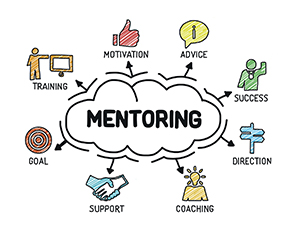
Develop the professional practices and characteristics to succeed in the law. Whether you're a new lawyer looking for guidance or an experienced lawyer interested in sharing your knowledge, this program is for you!
The Ready. Set. Practice. Mentoring Program is a voluntary program that matches new lawyers with experienced mentors in order to assist with law practice management, effective client representation, and career development. If you are a new lawyer looking for guidance from the study of law to the practice of law, this program is for you! Likewise, if you are an experienced lawyer interested in sharing your knowledge with new lawyers, this program is for you!
Learn more
Mentorship Goes Both Ways
While Richlen has mentored many attorneys over the years, she is equally clear that mentorship is not a one-way relationship.
“I also have learned so much from them … about even the practice of law, even about being a mom.”
That mutual exchange strengthens both mentor and mentee, creating a more dynamic and collaborative professional environment.
Her own mentors – many of whom guided her informally – played a critical role in shaping her career. In a full-circle moment, she now works alongside some of them as colleagues.
“They were really just at the right place at the right time in my career to really help me along the path.”
Advice for Young Lawyers: Take the First Step
For newer attorneys, Richlen acknowledges that finding a mentor can feel intimidating – but emphasizes that the first move often starts small.
“You have to take that first step … to introduce yourself and start to talk to them about their experiences and build a relationship.”
She encourages young lawyers to seek mentors within their communities – people who can offer not just legal guidance, but broader perspective.
“The practice of law is not your whole life and you have to be a whole other person in addition to your career.”
A Call: Mentor the Next Generation
For more experienced attorneys, Richlen’s message is equally direct: mentorship is both accessible and essential.
“No matter what your experience in the law has been, you have something valuable to share with people.”
In a profession built on advocacy and problem-solving, mentorship helps ensure that lawyers are not working in isolation – but as part of a broader, supportive community.
“This profession is very collegial and we would like it to be that way for many, many years.”
For Richlen, that sense of connection is at the heart of both her career and her recognition as Mentor of the Year – and it is a reminder that the future of the profession depends on lawyers willing to invest in one another.
Join Us at the Annual Meeting & Conference in June in Green Bay
Want to celebrate a friend, family member, or colleague being honored at the Member Recognition Celebration? Join us for this free event from 5:45 p.m. to 7 p.m. on Thursday, June 11, in La Crosse.
The celebration takes place at the State Bar Annual Meeting & Conference, June 11-12, 2026. Register now to choose from CLE sessions covering top trends, hot topics, and enduring advice for today’s lawyers.
In addition, featured plenary speakers, the Legal Expo, networking luncheons, and the Presidential Swearing-in Ceremony will help you connect, learn, and relax.
Reserve your spot today!