New Hires, Promotions, Partners
Rebecca Coleman, Marquette 2024, has joined Wilson Law Group LLC, Madison, as an associate and focuses on estate planning and trust administration.
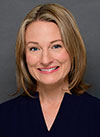 Kristin Leaf, William Mitchell 2008, has joined the family law team of Milwaukee-based trial and litigation law firm Gimbel, Reilly, Guerin & Brown LLP as a partner. Leaf previously practiced at a downtown Milwaukee firm. Leaf has handled not only family-law matters but also criminal defense, civil litigation, and guardianship cases involving both children and adults – areas that frequently intersect with family law. Her background in mediation and ADR rounds out her client-centered practice.
Elizabeth J. Schweiger, Thomas M. Cooley Law School 2010, has been promoted to partner at Blitt & Gaines P.C., a collections law firm. She has been with the firm since 2016 and practices out of the Milwaukee location.
Mergers, Relocations, New Offices
Centurion Legal Services LLC, a Milwaukee-based law firm focusing on estate and tax planning, and the estate planning practice of Angermeier & Rogers LLP, an estate planning and long-term care and asset protection firm, have merged. The Angermeier & Rogers LLP estate planning practice group operates under Centurion Legal Services effective Jan. 1, 2026. Estate planning clients of Angermeier & Rogers will continue to work with the same attorneys and staff they are familiar with while gaining access to Centurion’s additional services in tax planning, business succession planning, and estate strategy. All estate-planning personnel from Angermeier & Rogers remain with the practice, and existing estate plans continue to be fully valid and enforceable. Angermeier & Rogers LLP continues providing legal counsel through its disability practice group.
 Ben Payne, Marquette 2002, formerly the principal of Hanson & Payne LLC, has relocated to join forces with business litigation law firm The Rose Group SC. Rose Payne SC, Milwaukee, focuses on business litigation, asset protection, and bankruptcy. Payne continues to represent debtors and creditors in bankruptcy cases and litigation, state court receiverships, and collections, and advises business owners whose businesses face financial strain. Doug Rose, Marquette 1986, and The Rose Group lawyers continue to provide business litigation work all over Wisconsin.
Appointments, Elections
John W. Miller, U.W. 2006, has been appointed by Gov. Tony Evers as the secretary and CEO of the Wisconsin Economic Development Corporation. Miller started his career in public service in Washington, D.C., as a congressional staffer and later, deputy chief of staff, serving Wisconsin’s Fourth Congressional District. After law school, Miller joined Miller-St. Nazianz Inc., his family’s agricultural equipment manufacturing business, and was later named president and CEO of the company in 2008, becoming the fifth generation of his family to lead the business. In 2015, Miller founded Arenberg Holdings LLC, a venture capital fund in Milwaukee, which works to mentor and invest in early-stage companies in the Midwest.
 Shannon West, U.W. 2019, has joined the board of directors of SHARP Literacy Inc., a nonprofit organization dedicated to providing supplemental learning opportunities for underserved students, improving educational outcomes, and promoting literacy. West is with the Trusts and Estates Practice at Reinhart Boerner Van Deuren s.c., Milwaukee, and represents clients in trust, estate, and fiduciary litigation, including matters involving breach of trust, breach of fiduciary duty, undue influence, fiduciary removal and defense, and construction and reformation matters. She also assists high-net-worth individuals and business owners with estate planning and tax-related needs.
Authors, Speakers
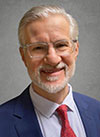 Jerry Grzeca, Marquette 1988, managing partner of Grzeca Law Group, Milwaukee, spoke at the 24th Annual AILA New York Chapter Immigration Law Symposium and Webcast in December in New York City. He served as a discussion panelist for “Representing Clients Before USCIS or in Visa Matters During an Era of Aggressive Enforcement.”
Awards, Degrees, Honors
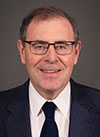 James T. Barry III, Chicago 1989, received the Judge Rudolph T. Randa Award from the Milwaukee Lawyers Chapter of the Federalist Society for Law and Public Policy. The award is conferred annually upon a recipient who exhibits “devoted service in upholding the rule of law, preserving the Constitution of the United States, and defending the proper role of the judiciary in our governmental system.” The late Judge Rudolph T. Randa served on the U.S. District Court for the Eastern District of Wisconsin for many years and on the Milwaukee Lawyers Chapter board. Barry, a founding member of the Milwaukee Lawyers Chapter and a member of the Federalist Society’s national board of visitors, is the president of Barry Commercial Real Estate Services Inc., a real estate brokerage and consulting firm headquartered in Milwaukee.
In Memoriam
Rustam A. Barbee, U.W. 1984, Kaneohe, Hawaii, Jan. 19, 1957 – Dec. 11, 2025.
David A. Bordow, California Western 1981, Milwaukee, May 2, 1954 – July 25, 2025.
Jay W. Endress, Marquette 1985, Oglesby, Ill., Sept. 5, 1960 – Sept. 13, 2025.
Hon. Raymond S. Huber, U.W. 1982, Waupaca, March 13, 1957 – Dec. 5, 2025.
Yolanda I. Lehner, U.W. 1989, Madison, Oct. 19, 1942 – Nov. 5, 2025.
Richard J. Rathjen, Valparaiso 1969, Wautoma, June 17, 1944 – Aug. 25, 2025.
Joseph Michael Russell, Northwestern 2003, Milwaukee, Dec. 19, 1970 – Aug. 28, 2025.
Raymond E. Schrank II, U.W. 1970, Muskego, Aug. 1, 1944 – Nov. 21, 2025.
Hon. Barry C. Slagle, Indiana Univ. Bloomington 1978, Milwaukee, April 25, 1952 – Dec. 29, 2024.
Congratulations to Recent Certified Paralegals

Through a State Bar program, paralegals in Wisconsin are eligible to be certified – a credential that demonstrates a paralegal’s dedication to professional development and excellence. The
State Bar of Wisconsin Certified Paralegal™ program is a self-funded, voluntary program for all paralegals in Wisconsin who meet the program’s criteria. For information about the program, visit
wisbar.org/paralegal.
Eleina Arce, Husch Blackwell LLP, West Allis.
Tiffani A. Bard, Anich Wickman & Lindsey SC, Ashland.
Rebecca J. Below, Madison Department of Civil Rights, Madison.
Diana K. Bruner, Axley LLP, Madison.
Krista N. Buettner, Shawano Menominee District Attorneys Office, Shawano.
Billie J. Jentsch, Kohner, Mann & Kailas SC, Milwaukee.
Dena Bauer, Tanya R. Braga, Susan Mixdorf, and Karla S. Wyse, Reinhart Boerner Van Deuren s.c., Milwaukee.
Stephanie M. Fish and Heidi Richter, Remley Law SC, Neenah.
Trisha L. Sterr, Wurtz Law Office LLC, Ripon.
The following individuals were newly certified or recertified as of March 7, 2023. For a full list of Certified Paralegals, visit wisbar.org/Paralegal.
How to Place your Announcement
If you have moved, become a partner or an associate, or received a promotion or an award, let us know! Writing guidelines are available here. Questions? Email us or call (608) 250-6127.
Email announcements to: MembersOnly@wisbar.org. Notices about State Bar members in good standing are printed as space is available, and subject to editing.
Ineligible announcements: Talks, speeches (unless they are of national stature), honors from other publications (including “Best of...,” “Rising star...,” and other lists), and political announcements are not accepted as announcements.
Photo placement: Submit a professional-quality photo with your announcement. If the photo is used, the State Bar will issue an invoice for $35 per photo. Please acknowledge the photo placement fee in your submission. Group photos and photos copied from websites are not accepted. High-resolution electronic photos are preferred to ensure high-quality production. Images should be sized at least 4”x6”, with a resolution no less than 150 dpi, although 300 dpi is preferred. Print photos will not be returned.
Deadline: Submit announcements by the first of the month preceding publication. For example, to place an announcement in the November issue, it must be received before October 1. Email to: MembersOnly@wisbar.org. Include your State Bar membership number.
» Cite this article: 99 Wis. Law. 60-61 (February 2026).
