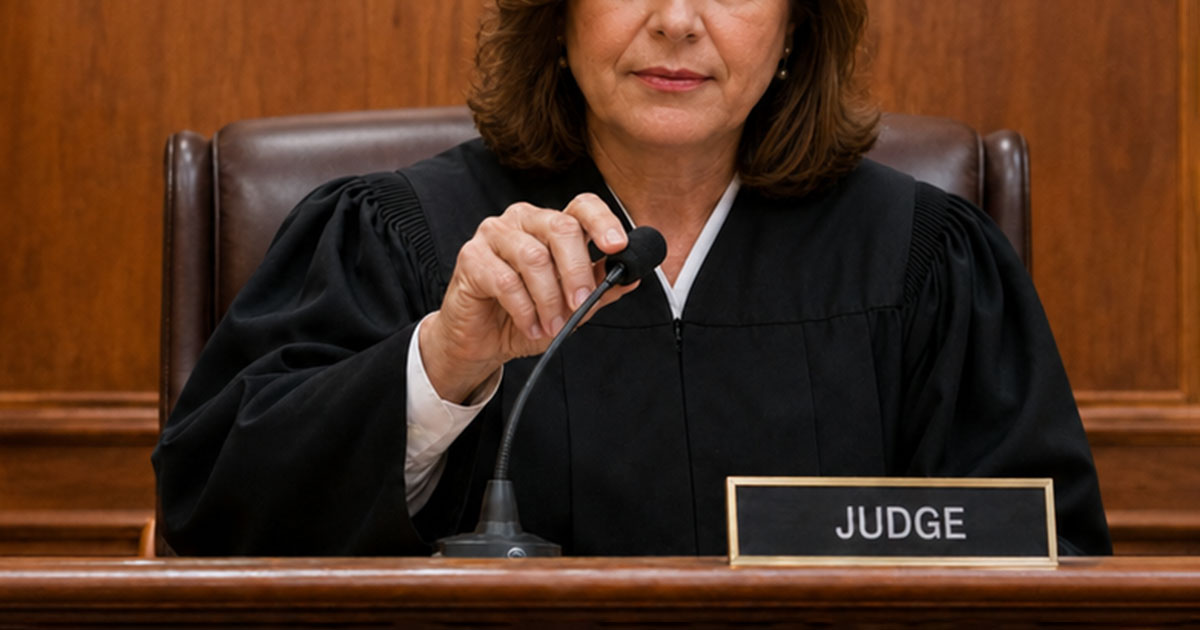
May 27, 2026 – Ball players, not umpires, become sports announcers, and a Tennessee ethics opinion decided that a judge cannot give play-by-play commentary on a trial.
Although the question involves a part-time judge, the Tennessee Judicial Ethics Committee in
Advisory Opinion No. 26-01 made clear that no judge could give analysis on current cases without violating ethical duties.
The communications violate
Tennessee Rule of Judicial Conduct (RJC) 2.10(A) to “not make any public statement that might reasonably be expected to affect the outcome or impair the fairness of a matter pending or impending in any court, or make any nonpublic statement that might substantially interfere with a fair trial or hearing.”
The Tennessee rule, located in chapter 10 of the state’s Supreme Court Rules, follows the American Bar Association’s (ABA)
Model Code of Judicial Conduct Rule 2.10.
Wisconsin’s equivalent,
Supreme Court Rule (SCR) 60.04(1)(j), says a judge “may not” engage in such statements.
‘Gavel to Gavel’
The judge would appear on a local news channel broadcasting as a “legal analyst.”
 Jay D. Jerde, Mitchell Hamline 2006, is a legal writer for the State Bar of Wisconsin, Madison. He can be reached by
email or by phone at (608) 250-6126.
Jay D. Jerde, Mitchell Hamline 2006, is a legal writer for the State Bar of Wisconsin, Madison. He can be reached by
email or by phone at (608) 250-6126.
Ethics Watch is a monthly article that tracks ethics trends and developments nationwide. It is NOT reviewed or written by the State Bar of Wisconsin’s ethics counsel attorneys, who write Ethical Dilemmas.
The judge would “comment on ongoing legal matters” and provide “‘gavel to gavel’ coverage of televised criminal trials.”
The program would be interactive: the judge would answer viewer questions.
Similar commentary appears elsewhere, the requester said. Judges “gave televised interviews during which they discussed recent cases” before courts in other jurisdictions.
Tennessee RJC 2.10(D) – like the ABA model rule and Wisconsin SCR 60.04(j) – allows judges to speak publicly to “explain court procedures.”
Wouldn’t this be educational television?
Not in Tennessee, the ethics committee clarified.
Tennessee RJC 2.10(A) intercepts any claim of civic education from judicial play-by-play commentary.
Under the rule, a judge may not make public statements that could affect the outcome or affect the fairness of a pending matter or “might substantially interfere with a fair trial or hearing.”
The ethics committee emphasized that “section (A) prohibits certain public or nonpublic statements concerning matters pending or impending
in any court.”
This limit serves to ensure “the independence, integrity, and impartiality of the judiciary,” the rule’s comment explains.
The request for the ethics advisory opinion didn’t give examples of the type of questions the judge as legal analyst might field.
“But it is not difficult to imagine commentary that would violate section (A),” the ethics committee said.
“For example, if a part-time judge were to comment on a presiding judge’s ruling, question a party’s trial strategy, express doubt about a witness’s testimony, or speculate about why a particular member of the jury was selected, these public statements ‘might reasonably be expected to affect the outcome or impair the fairness’ of the pending matter.”
‘Judges Speaking Generally’
A judge speaking about legal matters in public performs on a narrow playing field.
In the areas in which a judge may speak publicly, the judge is an ideal resource.
“Judges are uniquely qualified to engage in extrajudicial activities that concern the law, the legal system, and the administration of justice,” explains Comment 1 to Tennessee’s RJC 3.1.
The rule, like
ABA Model Code of Judicial Conduct Rule 3.1, describes permissible judicial participation in “extrajudicial activities.”
“However,” the ethics committee clarified, “both [Tennessee’s Code of Judicial Conduct] and our prior opinions contemplate judges speaking generally about the law or the judicial system, not providing commentary on a pending case.”
A judge could have a television spot talking about the law, such as “to explain how divorce or child custody proceedings work,” the ethics committee said.
“So long as the judge is doing nothing more than explaining how the law operates generally, the judge will not be in violation of the rule.”
Once that program crosses the line into a question-and-answer session about a specific case – even an allegedly hypothetical case – “the judge must refrain from commenting to stay compliant.”
It’s a “bright-line” restriction, the opinion admits.
One of the principal jobs of a judge is “to protect the integrity, independence, and impartiality of the judiciary” to which people look to resolve disputes fairly.
“Allowing a judge to comment on how a case should proceed, how a case is handled, and/or how a case was resolved tears at that message and allows both the public and the judiciary to question our judicial system.”
Such public comments, the opinion concludes, could be enough to “reasonably affect the outcome or impair the fairness of a pending or impending matter.”
Ethics Watch is a monthly article that tracks ethics trends and developments nationwide. It is NOT reviewed or written by the State Bar of Wisconsin’s ethics counsel attorneys, who write Ethical Dilemmas.
