Jan. 21, 2026 – The effective use of expert witnesses plays a critical role in litigation strategy.
Identifying and vetting potential expert witnesses involves research to locate experienced experts to retain, as well as evaluating both your own experts and those of your opponent to verify their areas of expertise and past expert appearances.
Expert witness research will help inform case strategy, bolster legal arguments, strategize counterarguments, and prepare for trial. Conducting expert research unearths valuable information to support expert selection, how to best leverage an expert’s testimony, and how to challenge an opponent’s expert.
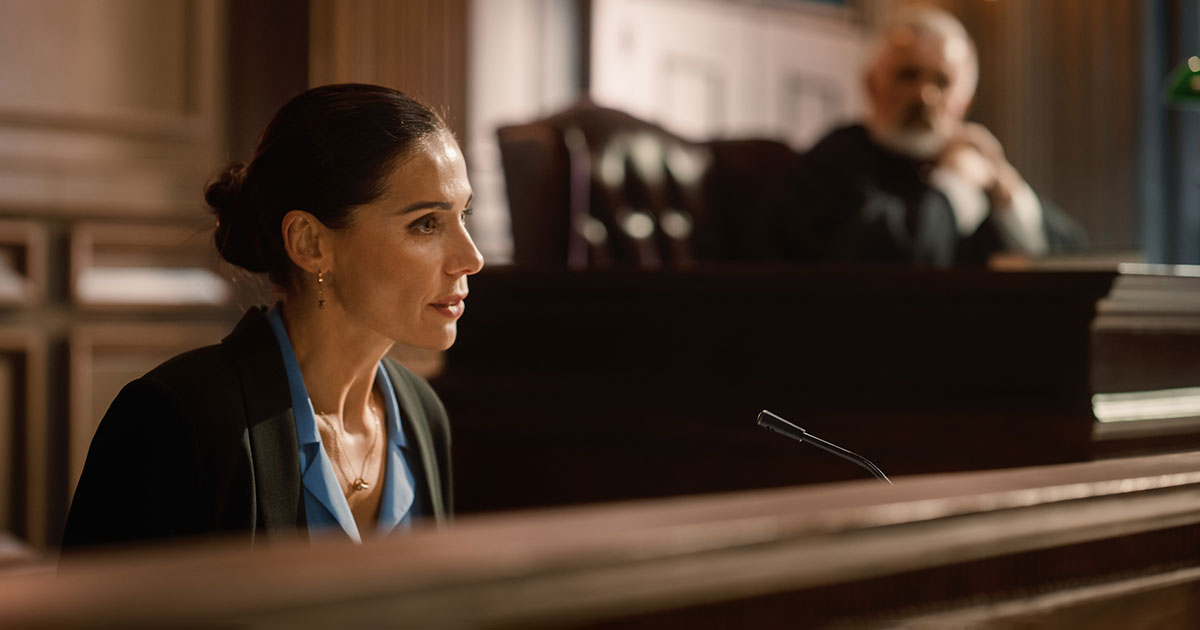
Expert witnesses provide specialized opinions to assist the court in understanding complex subjects. They support counsel by evaluating evidence and offering testimony that explains technical issues, such as medical conditions, accident reconstruction, or financial assessments, which are often beyond the knowledge of jurors. Their role is to bridge technical disciplines and the legal system to explain facts and strengthen arguments.
Experts are distinguished professionals recognized in their fields, possessing a robust educational background, a substantial portfolio of published works, and prior experience serving in an expert capacity. Most importantly, a viable expert has not made past statements contradictory to those they will present in your case.
In Wisconsin practice, the admissibility of opinions and expert testimony is governed by
Wis. Stat. chapter 907, and the scope and requirements of expert discovery are set forth in
Wis. Stat. section 804.01(2)(d). In federal court, the admissibility of expert testimony is controlled by
Fed. R. Evid. 702, while disclosure obligations concerning expert testimony are governed by
Fed. R. Civ. P. 26(a)(2).
This article shares tips and best practices on research to support locating an expert witness in a specific field of study and conducting due diligence research to vet your or opposing counsel’s expert witness.
Finding an Expert
The first step in using an expert is to locate a credible subject-matter expert with relevant knowledge, a proven reputation, and prior expert experience.
 Laura Olsen is Senior Manager, Research & Engagement, at Quarles & Brady LLP, Madison.
Peer referrals through traditional internal and external networking often produces the names of potential experts. Expert directories such as the
SEAK Expert Witness Directory or the
JurisPro Expert Witness Directory offer another avenue for identifying relevant experts. Expert witness referral services such as
Round Table Group and
Lexis Expert Research On-Demand provide recommendations on subject-matter experts and charge a fee only when you retain a recommended expert.
To mine for potential expert witnesses, conduct key word searches in court document and jury verdict summary databases on commercial legal research platforms on the subject-matter topics for which you seek an expert. Various commercial legal research services offer curated expert-witness-information databases featuring experts' deposition transcripts, experts' reports, declarations, and affidavits, trial transcripts, and court-filed curricula vitae to help with identification and selection of experts.
For example, a Boolean query in these expert databases such as
motorcycle /3 accident yields expert court documents and verdict summaries, which can then be narrowed by jurisdiction to find an expert in your desired geographic region. Review the results to locate experts who tend to opine for plaintiffs or defendants, depending on your client’s role in the litigation.
Vetting an Expert
Once you have identified a potential expert it is time to vet their background. The same is true for opposing counsel’s named experts. Focus on an expert’s curriculum vitae (CV), publications, speaking engagements, expert reports, affidavits, depositions, and trial transcripts as available in commercial legal research expert-witness databases.
If you do not have a CV identifying publications, you can search for scholarly works via
Google Scholar, PubMed for biomedical journal articles from MEDLINE,
JSTOR for the humanities and social sciences,
IEEE Xplore for engineering and computer science, and other specialized journal article databases in various fields.
Court documents as well as jury verdict and settlement summaries offer a goldmine of insights into an expert’s prior appearances and testimonies, which you can easily search and review via commercial online databases. A search for an expert’s name will often yield depositions, reports, affidavits, declarations, transcripts, testimonies, as well as curated reports aggregating an expert’s experience over time and by jurisdiction, allowing you to review the expert’s testimonial history and proffered opinions.
If needed, you can dig deeper into an expert’s background through searches of news databases, congressional testimony transcripts, social media posts, professional licensure and public disciplinary history, as well as personal litigation histories and criminal backgrounds. These sources may contain nuggets of information to help you bolster your expert’s credibility or raise questions about opposing counsel’s expert’s integrity or background.
Identifying Challenges to Experts
One of the most critical angles in expert research involves determining any prior challenges to the expert’s testimony and the outcomes.
The Daubert standard, a framework used by trial court judges to assess the reliability and relevance of expert witness testimony before presented to a jury, is the standard established in Daubert v. Merrell Dow Pharmaceuticals, 509 U.S. 579 (1993). In January 2011, the Wisconsin Legislature amended
Wis. Stat. section 907.02 through
2011 Wisconsin Act 2 to adopt the
Daubert standard. Thorough expert witness research should always include a review of Daubert challenges.
Westlaw offers an
Expert Challenge Report, providing a summary of expert challenges and judicial rulings on these challenges. LexisNexis features the
Daubert Tracker – Case Reports database, featuring summaries of opinions in which expert testimony has been challenged.
While these resources are useful in identifying challenges and outcomes, a granular search of court opinions and court dockets offers a deeper and more comprehensive dive to locate challenges. Craft a Boolean query to locate opinions and docket entries relating to expert challenges, such as
(firstname /2 lastname) /p expert /p (daubert or challeng! or quash! or strik! or exclu! or preclu! or limine).
Note that the search strategy used may differ between different commercial database vendors, and you can tweak the search strategy based on initial findings. The point is to diligently review all attempted challenges and their outcomes to help in your assessment of an expert’s background and credibility.
State Bar of Wisconsin Resources
Several State Bar of Wisconsin
PINNACLE® treatises cover the effective use of expert witnesses, such as Wisconsin Civil Procedure Before Trial,
Wisconsin Discovery Law and Practice, and
Wisconsin Trial Practice. These books outline key topics including witness preparation, examination, admissibility, discovery, depositions, testimony, challenges, and fees.
“Mastering Expert Witnesses in Litigation: A Guide for Attorneys,” featured in
InsideTrack in December 2024, offers a video with practical guidance on selecting, vetting, and preparing expert witnesses for litigation.
A Word on AI
When utilizing AI-enabled research tools to identify and evaluate potential expert witnesses, practitioners should confirm all results against the underlying source materials before relying on generalized findings. These tools can hallucinate and generate inaccurate or overly generalized descriptions of an expert’s credentials or history. As with all AI-enabled research tools: verify then trust.
Conclusion
Whether the task is identifying a qualified expert, rigorously vetting your own witness, or conducting due diligence on an opposing expert, a well-structured search strategy using a variety of reliable information sources remains essential. By approaching the process methodically, practitioners can develop a clearer understanding of each expert’s strengths, limitations, and expert appearance history, ultimately supporting informed decisions and a compelling case strategy.
Need Help? Ask a Law Librarian
Law librarians are a trusted source of knowledge and best practices on expert-witness research. Contact a law librarian for assistance navigating research resources and crafting an effective research strategy. You can find law librarians eager and happy to help you at these Wisconsin libraries:
