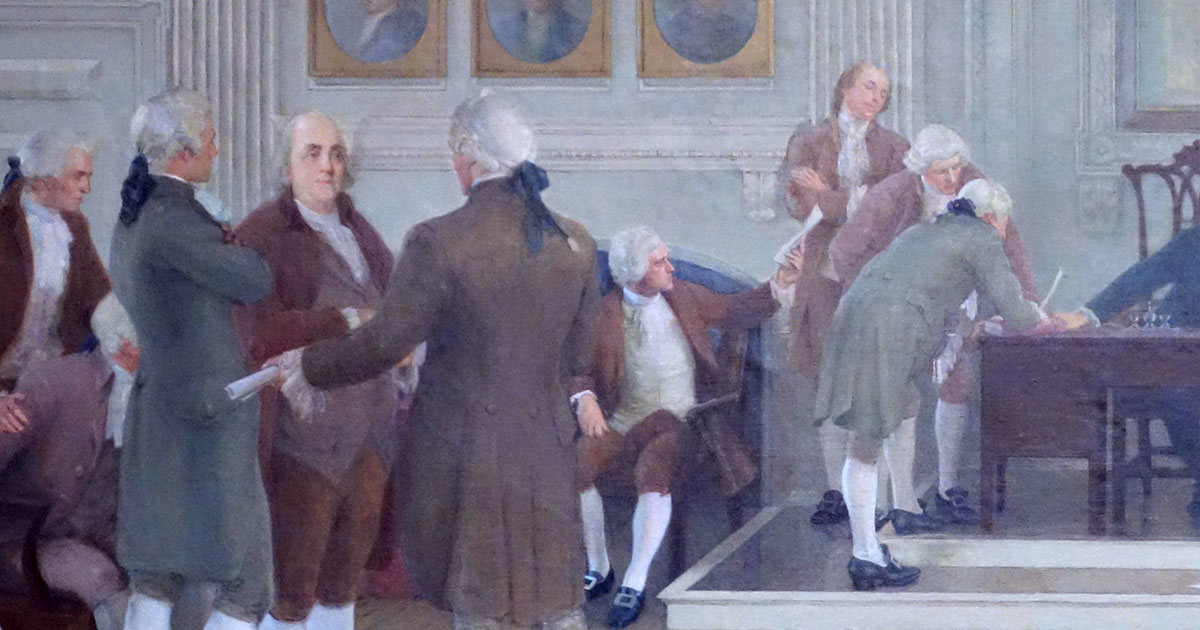
Two hundred and fifty years ago, the Declaration of Independence announced a principle that has defined – and confounded – the American experiment ever since: that all are created equal. It is a sentence we are taught to revere, often treated as a fixed point in our constitutional universe. Yet when it was written, it was neither fully intended nor remotely implemented in the way we understand it today.
At the founding, equality did not extend to women, to enslaved persons, or to most of the population. Political and economic power rested with a narrow class, and the early Republic reflected that reality. Slaveholders dominated the presidency, Congress, and the courts. The structures of the U.S. Constitution ensured that this was not incidental. It was foundational. The architecture of governance did not disrupt hierarchy; it reinforced it.
For all the talk of aspiration, the first decades of the Republic tell a different story. The institutions of government did not strive toward equality; they stabilized a system that excluded most of the population from it. If the founding was meant to be aspirational, the early returns suggest a nation content to postpone that aspiration indefinitely – if not altogether.
And yet, the words endured. Not because the system honored them, but because it never fully erased them. That tension – between what was written and what was done – has defined the American story ever since. It is a tension that has fueled reform movements, judicial decisions, and constitutional amendments. It is also a tension that has never been fully resolved.
Wisconsin’s Role: Reformist, Insistent, Unfinished
Wisconsin has its own place in that story. In 1854, in Ripon, Wis., a meeting helped give rise to a political movement grounded in opposition to the expansion of slavery. The state would go on to produce leaders such as Robert M. La Follette, whose progressive vision emphasized transparency, accountability, and the role of law in checking concentrated power. Wisconsin’s legal tradition reflects a willingness to test institutions and to demand more of them.
Wisconsin courts, including the Wisconsin Supreme Court, have also played a central role in shaping debates over rights and governance. In Teigen v. Wisconsin Elections Commission,[1] issued in 2022, the court addressed the legality of ballot drop boxes, placing the court squarely at the center of national debates over election administration and access to the ballot. Cases like Teigen underscore that even at the state level, constitutional and statutory meaning remains contested, and that courts are active participants in defining the boundaries of participation.
Give and Take: The American Experiment Under Pressure
The American promise has never been self-executing. It has always depended on institutions to enforce it and on individuals to insist upon it. The Civil War and the amendments that followed redefined the U.S. Constitution in fundamental ways, but even those changes required generations of advocacy and enforcement. The Civil Rights Movement forced the nation to confront its contradictions, yet even those gains have proven subject to retrenchment and reinterpretation.
 Daniel A. Cotter, a firm member at Aronberg Goldgehn in Chicago and immediate past president of the National Conference of Bar Presidents (NCBP), received the 2026 NCBP/LexisNexis Rule of Law Award. The annual award recognizes individuals who have made significant contributions to strengthening and advancing the rule of law.
The courts have been central to this ongoing argument. The U.S. Supreme Court has expanded and contracted rights across different eras. Decisions such as Dred Scott and Plessy reflect periods in which the Court narrowed the promise, while Brown and later cases reflect efforts to expand it.[2] The U.S. Constitution itself has not changed in those moments; the interpretation – and the willingness to enforce its principles – have.
At 250 years, the American experiment appears less like a completed project and more like a system under strain. Debates over executive authority, voting rights, and institutional legitimacy are not peripheral. They are central to whether the promise retains meaning. Structural features of the system continue to produce outcomes that raise questions about representation and participation. Those questions are not new, but they feel newly urgent.
Lawyers as Drafters, Defenders, and Dismantlers
It is often noted that many of the architects of the founding were lawyers. They were trained in the language of rights, structure, and constraint. But that observation raises a harder question: What did they do (and what have we done) to implement the principles they articulated? The law does not enforce itself. It depends on lawyers to give it life in practice.
Throughout American history, lawyers have occupied both sides of the nation’s defining conflicts. They have defended systems of exclusion, and they have dismantled them. They have argued for equality and against it. That dual role is not a flaw in the profession; it is a reflection of the power of law itself. But it also places a burden on lawyers to decide how that power will be used.
Anyone who reads my work knows I do not write about the rule of law because it is fashionable. I write about it because it is fragile. Because it is contested. And because it is always one generation away from erosion. We like to think of it as permanent – etched in stone. History tells a different story. Institutions weaken. Norms erode. Pressure builds.
Protecting Process and Principle
Defending the rule of law does not mean freezing it in amber. It does not mean confusing nostalgia with principle. And it does not mean defending outcomes we prefer while rejecting those we do not. It means defending the process. It means respecting courts even when we lose. It means protecting judicial independence even when decisions anger our allies. It means insisting that disputes are resolved by law, not by force.
The rule of law is not about who wins. It is about how decisions are made. That distinction matters more in times of strain. When confidence in institutions wavers, process becomes the stabilizing force. When process is ignored, the system itself begins to fray.
Lawyers are the stewards of that promise. We stand between order and chaos. We keep institutions functioning when they are under pressure. We defend the idea that law – not power – governs. That responsibility is not abstract. It is operational. It shows up in the cases we take, the arguments we make, and the positions we are willing to defend.
The call at 250 is not symbolic. Write. Speak. Teach. Mentor. Show up. Push back. Correct the record. Protect the institutions. Those actions are not extraordinary – they are the baseline of a functioning legal profession. But they require something that cannot be assumed: willingness.
History teaches that the window for speaking up does not remain open indefinitely. There are moments when silence is still an option, and there are moments when silence becomes acquiescence. The challenge for lawyers is recognizing the difference – and acting accordingly.
The Rule of Law: Earned, Not Inherited
The rule of law is not inherited. It is earned by every generation. At 250 years, the question is not whether the founders got it right. They did not. The question is whether we are prepared to insist that the principles they articulated have meaning today. That work does not belong to history. It belongs to us.
Two hundred and fifty years later, the promise remains. The question is whether we still mean it.
Endnotes
[1] Teigen v. Wisconsin Elections Comm’n, 2022 WI 64, 403 Wis. 2d 607, 976 N.W.2d 519, overruled by Priorities USA v. Wisconsin Elections Comm’n, 2024 WI 32, 412 Wis. 2d 594, 8 N.W.3d 429. ^
[2] Dred Scott v. Sandford, 60 U.S. 393 (1857); Plessy v. Ferguson, 163 U.S. 537 (1896); Brown v. Board of Educ., 347 U.S. 483 (1954). ^
» Cite this article: 99 Wis. Law. 36-38 (June 2026).
